

Rosehip oil is one of the most useful plant oils in clean skincare, and one of the most misrepresented. It contains essential fatty acids (linoleic, linolenic, oleic), tocopherols, carotenoids, and trace trans-retinoic acid. It has real antioxidant and barrier-support properties. It is not, however, a meaningful source of retinoid activity. The "natural retinol" framing applied to rosehip oil is misleading: the trace trans-retinoic acid it contains is several orders of magnitude below pharmaceutically relevant concentrations. What rosehip oil is genuinely useful for: barrier support, antioxidant support, gentle hydration, and as a supporting carrier oil alongside actual retinoids.
Rosehip oil is a genuinely useful ingredient. It is also genuinely misrepresented, in ways that do it no favours and set real expectations that cannot be met.
The most common piece of misleading rosehip marketing is the phrase "natural retinol" or "nature's tretinoin." These framings exist because rosehip oil does contain trace trans-retinoic acid, a real fact, but the concentration is so far below what matters in retinoid pharmacology that describing rosehip oil as a vitamin A source is like describing green tea as a source of caffeine sufficient to keep you awake. Technically present, practically irrelevant at that level.
What rosehip oil is good for is real and worth understanding clearly. It is a genuinely nourishing plant oil, rich in linoleic acid for barrier support, tocopherols for antioxidant activity, and carotenoids that give it its warm colour and contribute further antioxidant properties. In the Witchy Retinyl Renewal Oil, rosehip is a core part of the carrier base for these real reasons. Retinyl palmitate does the vitamin A work. Rosehip does what rosehip actually does.

What rosehip oil actually is
Rosehip is the fruit of the wild rose plant, the small round seed-bearing structure that forms after the flower petals have fallen. Cold-pressing the seeds, the flesh, or both produces a fixed oil used in cosmetics, food supplements, and traditional medicine across many cultures.
The species matters more than many product labels acknowledge. The three most commonly used species are Rosa canina (dog rose, native to Europe and western Asia, producing a yellow-orange to pale golden oil), Rosa rubiginosa (sweet briar, grown predominantly in South America, particularly Chile, producing a deeper red-orange oil and often considered the premium source for cosmetic use), and Rosa moschata (musk rose, used more variably across regions). Differences between species are real: they affect fatty acid composition, carotenoid concentration, and the trace levels of trans-retinoic acid. Rosa rubiginosa typically shows higher concentrations of most bioactive components, which is why it commands a premium and why many clinical studies specifically used this species [2].
The part of the fruit used also affects the profile. Seed oil tends to be higher in polyunsaturated fatty acids. Flesh-derived oil tends to carry more carotenoids. Cold-pressed, unrefined oil retains more of these components than refined or solvent-extracted versions. The colour is a rough guide: a deep golden-orange to red-orange colour indicates intact carotenoid content. Pale, almost clear rosehip oil has typically been refined in ways that strip these components.
For skin that wants rosehip's genuine properties alongside actual cosmetic vitamin A, the Witchy Retinyl Renewal Oil includes rosehip as one of the supporting plant oils in its carrier base.
What is in rosehip oil
The active composition of rosehip oil is well characterised in the literature and worth knowing precisely, because it explains both what the oil is useful for and what it cannot do.
Linoleic acid (omega-6): 35 to 55% of total fatty acids. This is the most clinically important component for skin function. Linoleic acid is an essential fatty acid that the body cannot synthesise and that is a key building block for ceramide synthesis in the skin barrier. Skin deficient in linoleic acid tends toward increased transepidermal water loss and barrier dysfunction. Topical linoleic acid has been shown to support barrier repair in compromised skin [1].
Alpha-linolenic acid (omega-3): 25 to 40% of total fatty acids. Also an essential fatty acid, associated with calming-feeling and barrier-support effects. The high combined polyunsaturated fatty acid content of rosehip oil is what sets it apart from more oleic-dominant oils like olive or argan [3].
Oleic acid (omega-9): 10 to 20% of total fatty acids. Monounsaturated, more skin-penetrating than linoleic acid. Contributes to the emollient feel of the oil [3].
Tocopherols (vitamin E, primarily alpha-tocopherol and gamma-tocopherol). Antioxidants and natural preservatives. The tocopherol content of rosehip oil is relevant both for the skin and for the stability of other active ingredients it is formulated with. Tocopherols slow oxidation of the polyunsaturated fatty acids in rosehip itself (a real concern, as high-linoleic oils are prone to rancidity), and they contribute antioxidant activity at the skin surface.
Carotenoids (beta-carotene, lycopene, and others). These are the pigments that give rosehip oil its characteristic warm colour. They are antioxidants with meaningful activity in the skin and they are part of what distinguishes a good unrefined rosehip oil from a pale, processed one. These are not pro-vitamin A in the way dietary beta-carotene is in the context of supplement use.
Trans-retinoic acid: trace quantities. This is the component behind the "natural retinol" marketing. Trans-retinoic acid is present and real. Its concentrations in rosehip oil are in the range of micrograms per gram of oil. That matters, and the next section explains why.
Phytosterols (beta-sitosterol, campesterol). Plant sterols with some evidence for barrier-support and calming-feeling effects, and a role in emulsification and skin feel.
A note on vitamin C. Rosehip fruit flesh is a legitimate source of vitamin C. Rosehip oil is not. Vitamin C is water-soluble and is almost entirely lost during the oil extraction process. Vitamin C belongs to rosehip powder, rosehip tea, and rosehip supplements, not to cold-pressed rosehip oil.
"The high linoleic acid content of rosehip oil supports the skin barrier and is associated with calming-feeling and antioxidant properties. The trace trans-retinoic acid content, while real, is not present at concentrations relevant to retinoid pharmacology."Lin et al., International Journal of Molecular Sciences, 2017 [1]
What rosehip oil is actually good for
The genuine uses of rosehip oil follow directly from its composition. They are real, they are supported by the research, and they are enough to make it a worthwhile ingredient without any retinoid claims attached.
Skin barrier function. The high linoleic acid content makes rosehip oil a useful topical source of a fatty acid that is essential for ceramide synthesis and barrier repair. Skin with a compromised or deficient barrier tends to be low in linoleic acid. Research suggests topical application of linoleic acid-rich oils can support barrier restoration in some skin types [1].
Antioxidant support. The tocopherols and carotenoids in unrefined rosehip oil have documented antioxidant activity. Antioxidant support at the skin surface is relevant to the appearance of dullness, the look of skin exposed to environmental stressors, and the stability of other active ingredients in the same formulation.
The look of dullness. Rosehip oil has a slightly luminous, warm finish on the skin. This is partly its carotenoid pigment, partly its emollient effect. It is a real cosmetic benefit, though not a pharmacological one.
Gentle moisturisation. Rosehip oil is relatively non-comedogenic for most skin types, sitting lighter than many oleic-heavy oils. It is absorbed reasonably well and provides a softening, emollient effect without the heaviness of oils like coconut or olive.
Calming-feeling effects. The combination of linoleic acid and phytosterols is associated with some calming-feeling properties in the literature, suggesting potential usefulness for reactive or easily-irritated-feeling skin [1] [2].
A supporting role alongside actual retinoids. This is where rosehip oil earns its place in a well-formulated retinoid product. The barrier-support and antioxidant properties are useful alongside a retinoid, not instead of one. The linoleic acid supports the skin during the retinoid adjustment period. The tocopherols help protect the retinoid from oxidation. These are real formulation reasons, not marketing ones.
What rosehip oil is not
This is the part that matters as much as what rosehip oil is.
It is not a substitute for an actual retinoid. The trace trans-retinoic acid in rosehip oil is typically in the range of micrograms per gram of oil. Pharmaceutical tretinoin is formulated at concentrations of 0.025% to 0.1%, which is 250 to 1,000 micrograms per gram. That is a difference of two to three orders of magnitude: one hundred to one thousand times less retinoic acid than even the mildest prescription tretinoin concentration. The term "nature's tretinoin" is not a meaningful scientific claim.
It is not vitamin A in the way cosmetic retinoids are. Retinyl palmitate, retinol, retinaldehyde, and tretinoin all work through the retinoid receptor pathway at concentrations that produce meaningful receptor binding and gene expression changes. The trace retinoic acid in rosehip oil does not reach concentrations that produce these effects at skin level.
It is not a treatment for medical skin conditions. Acne, melasma, established photodamage, significant scarring: these are clinical presentations that require clinically meaningful concentrations of active ingredients or in-clinic procedures. Rosehip oil can be a useful supporting ingredient in a broader routine, but it is not a treatment in the medical sense.
It is not enough on its own for established visible sun-ageing. For noticeable sun-related changes to skin texture, pigmentation, and fine lines, an actual retinoid (or in-clinic option) is the more direct approach. Rosehip oil is a genuinely useful supporting ingredient, not a standalone active for this purpose.
The "natural retinol" framing sets unrealistic expectations. Women who buy rosehip oil expecting retinoid-level results will not get them, and they will often conclude the product failed them. It did not fail them. It was misrepresented to them. That distinction matters.

Retinyl Renewal Oil
Rosehip oil in the carrier base, doing what it genuinely does. Retinyl palmitate doing the vitamin A work. The two together, honestly formulated.
See the Retinyl Renewal OilRosehip oil in the Witchy Retinyl Renewal Oil
Rosehip oil is a core component of the carrier base in the Retinyl Renewal Oil. It is not there as a retinoid claim. It is there for three specific, formulation-logic reasons.
The active vitamin A in the Retinyl Renewal Oil is retinyl palmitate, an ester of retinol and palmitic acid. When applied to skin, it undergoes a three-step enzymatic conversion: retinyl palmitate to retinol (via esterase enzymes), retinol to retinaldehyde (via alcohol dehydrogenase), and retinaldehyde to retinoic acid (via aldehyde dehydrogenase). The retinoic acid then binds to retinoid receptors and influences cell behaviour, structural support, and surface renewal. This conversion pathway has been characterised in detail in the peer-reviewed literature [4]. Rosehip plays no role in this pathway. Retinyl palmitate is the active; rosehip is the carrier.
What rosehip contributes to the formulation is distinct from the retinoid pathway and genuinely useful alongside it.
Linoleic acid for barrier support during the retinoid adjustment phase. When beginning a retinoid routine, even a gentle one, some skin experiences a temporary increase in transepidermal water loss as cell turnover adjusts. The linoleic acid in the rosehip carrier supports the skin barrier through this period in a way that a purely oleic carrier would not.
Tocopherols to protect retinyl palmitate from oxidation. Retinyl palmitate is sensitive to oxidative degradation. Vitamin E (tocopherols) is a known antioxidant stabiliser for retinoid formulations. The tocopherol content of unrefined rosehip oil contributes to protecting the retinyl palmitate from premature breakdown, which extends the effective shelf life of the formulation and maintains active concentration.
Carotenoids and additional antioxidant activity at the skin surface. The carotenoids in rosehip oil contribute antioxidant properties alongside the tocopherols, providing an additional layer of protection against environmental oxidative stress at the skin surface.
These are real reasons for a real formulation decision. The rosehip in the Retinyl Renewal Oil is not decoration, and it is not there to allow a retinoid claim. It is a well-chosen carrier oil that supports the active and the skin simultaneously.
How to use rosehip oil if it is your only retinoid-adjacent product
Some women want to use rosehip oil on its own merits, without pairing it with an actual retinoid. That is a reasonable choice, particularly for skin that is not ready for a retinoid or for someone who simply wants gentle, nourishing oil care. The following applies to that use.
Choose cold-pressed, unrefined oil. The colour is your guide. A genuine, well-processed rosehip oil should be deep golden-orange to red-orange, sometimes with a slight amber quality. Pale, yellow, or nearly clear rosehip oil has typically been refined in ways that reduce the fatty acid profile and strip carotenoids. The smell of good rosehip oil is faintly green, faintly earthy, gentle. Refined oil tends to be nearly odourless.
Apply to damp skin after a humectant serum. Rosehip oil works best as a seal step after a hyaluronic acid serum applied to slightly damp skin. The humectant draws water into the upper layers; the oil seals it in and delivers the fatty acids and antioxidants to the skin surface. A few drops, pressed gently, is sufficient. It does not need to be applied heavily.
Evening is a natural fit, but daytime works too. Carotenoids in rosehip oil can leave a very subtle warm tint on the skin, which some people find pleasant and others find noticeable under makeup. Evening use avoids this entirely. Daytime use is fine as long as you are applying broad-spectrum SPF30 or higher on top. In Australia, sunscreen is a year-round non-negotiable regardless of what else is in your routine.
Consistency over months. Barrier support and antioxidant effects from a plant oil are cumulative, not immediate. If you are using rosehip oil for its genuine properties, give it two to three months of consistent daily use before assessing whether it is making a difference to how your skin feels and looks.
Store it carefully. Rosehip oil is a high-linoleic, polyunsaturated oil that oxidises relatively quickly. Keep it in a dark, cool location. Refrigeration after opening extends its useful life. An oil that smells rancid (sharp, acrid, like old cooking oil) should be discarded.
Rosehip oil is widely considered safe for cosmetic use, including during pregnancy and breastfeeding. A few situations still warrant a clinician's input: known plant allergies (patch test for 48 hours before applying to face); active skin conditions (eczema, perioral dermatitis, rosacea in flare, check with your GP before adding any new oil); significant scarring, pigmentation or established sun damage that rosehip alone is not addressing (a dermatologist may have more direct options). healthdirect.gov.au and the Australasian College of Dermatologists A to Z of Skin are the AU resources.

I have made rosehip-based products in my own kitchen for years. Long before Witchy Skin existed, I was infusing rosehip seeds into jojoba and olive oils for face masks and balms. There is something genuinely lovely about working with rosehip. The colour is beautiful. The smell is faintly green, faintly floral, gentle. The feel of the oil on the skin is soft and warm. It is a real ingredient with real properties.
What it is not, and what I have never claimed it to be, is a retinoid. The "natural retinol" marketing does the ingredient a disservice. It sets women up to expect retinoid-equivalent results, which do not come, and they conclude the rosehip has failed. When I formulated the Retinyl Renewal Oil, I knew I wanted rosehip in the carrier base: for the linoleic acid that supports the skin barrier, the tocopherols that protect the retinyl palmitate from oxidation, the antioxidant activity, and the way it feels on the skin. Those are real reasons. The clearer version of skincare is more interesting than the marketed version. Rosehip oil does what it is good at, and the retinyl palmitate does what retinoids do. The two together are more than either would be alone.
Common questions
Is rosehip oil the same as retinol?
No. Rosehip oil contains trace amounts of trans-retinoic acid, which is the basis for the "natural retinol" marketing, but the concentrations are several orders of magnitude below those that produce meaningful retinoid receptor activity. Retinol and rosehip oil are different categories: retinol is a cosmetic vitamin A active that converts to retinoic acid at concentrations that drive visible skin change; rosehip oil is a plant oil with genuine barrier-support and antioxidant properties that do not depend on any retinoid pathway.
Does rosehip oil work for fine lines?
Rosehip oil can contribute to the appearance of softer, more nourished skin through its barrier-support, antioxidant, and emollient properties. Whether it produces visible change in fine lines specifically depends on the depth of those lines and what is driving them. It is unlikely to produce the level of change an actual retinoid does for established fine lines. As a supporting ingredient in a broader routine, it is useful. As a standalone treatment for visible sun-ageing, it is modest.
Can rosehip oil replace retinol?
For gentle hydration and barrier function, rosehip oil may be enough on its own. For fine lines, texture, and visible sun-ageing, an actual retinoid is the more direct option. Rosehip oil does not operate through the retinoid receptor pathway at concentrations that produce the same cellular changes as retinol or retinaldehyde. They are not equivalent, and positioning rosehip as a retinol replacement creates expectations that will not be met.
Is rosehip oil good for sensitive skin?
Generally yes. Rosehip oil is well-tolerated by most skin types, including some sensitive-feeling or reactive skin. The high linoleic acid content supports the skin barrier rather than stressing it, and the oil sits relatively lightly compared to more occlusive options. If you have known plant or pollen allergies, particularly to members of the rose family, patch test for 48 hours on your inner arm before applying to your face.
Is rosehip oil safe during pregnancy?
There are no known concerns with topical rosehip oil during pregnancy or breastfeeding. It is a plant oil without the retinoid considerations that apply to cosmetic vitamin A products. If your broader routine includes other actives, check those separately with a clinician. As always, speak with your GP, obstetrician, or midwife if you have any concerns about your skincare during pregnancy.
What is the best rosehip oil to buy?
Cold-pressed, unrefined rosehip oil. The colour should be deep golden-orange to red-orange, not pale or nearly clear. Rosa rubiginosa (from South America, particularly Chile) is often considered the premium species for cosmetic use, but quality varies more by processing than by species. An oil that smells rancid should be discarded. Refrigerate after opening to extend shelf life.
Can I use rosehip oil with retinol?
Yes, and it is a useful combination. The barrier-support and antioxidant properties of rosehip oil complement the retinoid pathway rather than interfering with it. You can use rosehip oil as a seal step on retinoid-free evenings, or use the Retinyl Renewal Oil where rosehip is already built into the carrier base alongside retinyl palmitate. The tocopherols in rosehip also help protect retinyl palmitate from oxidative degradation.
How long does rosehip oil take to show results?
Changes in skin feel and appearance of dullness are often noticeable within a few weeks. Changes to fine lines or pigmentation are slower and more subtle than with an actual retinoid, typically across several months of consistent use. Rosehip oil works better as a supporting ingredient in a routine that also includes an actual retinoid than as a standalone active for visible skin change.
The Renewal Ritual
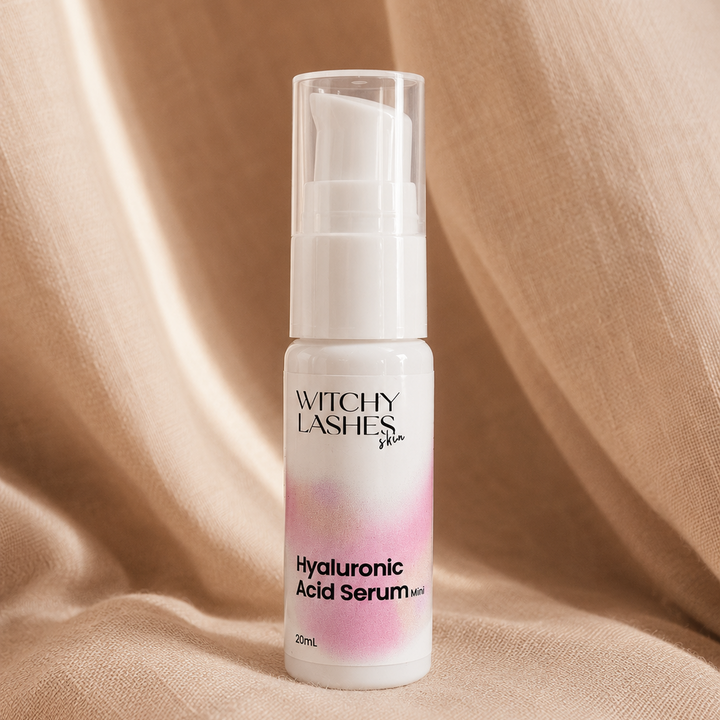
Retinyl Renewal Oil (rosehip in the carrier, retinyl palmitate as the active) paired with the Hyaluronic Acid Serum and the Blue Tansy Calming Facial Oil.

Where to next
References
- Lin T-K, et al. Anti-Inflammatory and Skin Barrier Repair Effects of Topical Application of Some Plant Oils. International Journal of Molecular Sciences. 2017.
- Mármol I, et al. Rosehip: an underestimated functional food? International Journal of Molecular Sciences. 2017.
- Franco D, et al. Extraction of rosehip seed oil. Bioresource Technology. 2007.
- Sorg O, et al. Retinol and retinaldehyde: mechanisms of action and clinical applications. Dermatologic Therapy. 2006.

