

Retinoids After Australian Summer: Why Autumn Is the Right Window to Start or Restart
Late summer through early autumn is the most sensible window to start or restart a retinoid in Australia. A 2003 study (Antille et al.) showed vitamin A applied to skin is consumed by UV exposure, which means sun-exposed skin is genuinely vitamin A-depleted by the end of summer. The season is also kinder: peak UV is passing, temperatures are gentler, indoor humidity starts to recover. For skin that has been through an Australian summer, autumn is when the biological timing, the seasonal environment, and the skin's own need for renewal support align.
Australian summer asks a lot of skin. Months of UV among the strongest in the world, sustained heat, salt water and chlorine, the constant swing between outdoor sun and air-conditioned interiors. By February or March, many faces carry what might be described as a sun-tired quality: slightly duller than they were in October, a little more textured, pigmentation sitting closer to the surface. It is not failure. It is the cumulative record of a long, bright season.
The science behind this is more specific than it might seem. Research by Antille and colleagues in 2003 showed that vitamin A applied to skin is consumed by UV exposure, with depletion correlating with irradiation dose [1]. This means sun-exposed skin is not simply depleted of moisture or barrier lipids by summer's end. It is also running lower on the vitamin A it would otherwise use in the normal renewal process.
Autumn is also the kinder environment for tolerance. Peak UV moves past, temperatures settle, indoor humidity begins recovering as air-conditioning use drops in March and April. The first weeks of any retinoid introduction are when skin is most reactive, and the environmental factors that make that harder (heat, UV, dry air) are all trending in the right direction through autumn.
Whether you are starting a retinoid for the first time or coming back to one after a summer pause, this window makes sense on multiple levels at once. The Witchy Retinyl Renewal Oil uses retinyl palmitate, one of the gentlest cosmetic forms of vitamin A, in a botanical carrier base. It is made for skin that wants renewal support without being pushed too hard: the right tool for this particular season.

What Australian summer does to skin
The cumulative load of an Australian summer is not a single insult. It is a stack of overlapping stressors that, individually, the skin handles reasonably well. Together, over several months, they tend to leave the barrier in a more fragile state than it began.
UV is the dominant factor. Australia sits at low latitude with relatively thin atmospheric ozone in certain regions, producing UV indices that reach 12 or above on typical summer days. Prolonged UV exposure degrades structural proteins in the dermis, depletes antioxidant reserves, and as Antille et al. showed, specifically consumes topically applied vitamin A [1]. The skin's own vitamin A reserves are drawn on as a photoprotective response, leaving less available for the renewal signalling those molecules normally support.
Heat adds a separate layer. Sustained high temperatures produce vasodilation: the look of persistent redness or flushing that often lingers well past the beach or pool. For skin already prone to reactivity, this baseline state of mild vascular stimulation makes everything feel more sensitised.
Salt water and chlorine each disrupt the skin's lipid layer in their own way. Salt is hygroscopic and draws moisture out. Chlorine is an oxidant that degrades the ceramides and fatty acids that hold the barrier together. Repeated exposure through a summer of swimming leaves the outer layers more permeable and more easily irritated.
Wind compounds transepidermal water loss, particularly on beach or coastal days. The swing between outdoor heat and heavily air-conditioned interiors exposes skin to humidity as low as 25 to 40 percent indoors, against the 50 to 60 percent that most skin handles without strain. Sweat combined with sunscreen residue can sit in pores and contribute to a congested, uneven texture. And summer's disruption to routine consistency, holidays, late nights, skipped evenings, means whatever protective habits were in place through winter often slip.
The Witchy Retinyl Renewal Oil uses retinyl palmitate in a botanical carrier base, formulated for skin that has been through a difficult season and wants gentle, consistent support rather than being pushed too hard.
What this looks like on your face
The cumulative picture tends to show up on the face in a recognisable pattern by February or March. Not dramatically. But clearly, if you know what you are looking for.
Complexion often looks dull: the light-reflective quality of healthy skin surface is muted. Texture feels slightly rougher, and fine lines catch light more sharply than they did in October. Pigmentation patterns sit closer to the surface: sun spots that were faint are now more visible, hyperpigmentation is more defined, and for women with a history of melasma, the condition tends to be more present through and after summer.
Reactivity baseline shifts upward. Skin that was comfortable in July may flush more readily in March. Slight tightness after cleansing is common. Some women describe their skin as feeling thinner, or papery: a sense that the outer layers are not as cushioned as they were.
None of this is failure. It is simply the skin showing what the season has been. And it is also, usefully, the skin in a state where what comes next can make a meaningful difference.
"Vitamin A applied to the skin surface is consumed by UVB exposure, with depletion correlating with irradiation dose. Sun-exposed skin may therefore be genuinely vitamin A-depleted, providing a biological rationale for topical retinoid support in the post-summer period."Antille et al., Journal of Investigative Dermatology, 2003 [1]
Why vitamin A is well-timed for this
Retinoids have one of the stronger evidence bases of any cosmetic active when it comes to supporting the appearance of skin that has accumulated photoageing. Research by Mukherjee and colleagues in 2006 reviewed the clinical literature and found consistent evidence that topical retinoids support improvements in the appearance of fine lines, skin texture, and pigmentation associated with cumulative UV exposure [3]. Sorg and colleagues in the same year examined the mechanisms, noting that retinoids influence the signalling pathways the skin uses in its normal renewal cycle [4].
More recently, Shu and colleagues in 2023 examined retinyl palmitate specifically in a model of UVB-induced skin changes [2]. The research found reduced markers of UVB-induced collagen degradation, reduced inflammatory markers, and dose-dependent improvements in the appearance of wrinkles and erythema in UVB-irradiated skin. This is one of the cleaner pieces of evidence for retinyl palmitate as more than a mild precursor: in the context of UV-affected skin, it appears to support the appearance pathways the skin is already attempting to use.
The Antille finding adds a further layer of rationale [1]. If vitamin A reserves have been depleted by UV exposure over a long summer, an autumn restart is partly about replenishing what the season has used. The timing is not arbitrary. It is a response to what the skin has actually been through.
The framing that matters here is careful. Retinoids support the appearance pathway: the look of softer texture, more even tone, more comfortable skin. They do not reverse structural sun damage in the dermal sense, and a cosmetic retinoid is not a clinical treatment. What is reasonable to expect, and what the evidence supports, is cumulative, visible change in skin appearance over consistent use across months.
Why autumn is also the right tolerance window
The timing argument for autumn is not only biological. The environment is genuinely more forgiving for introducing or reintroducing a retinoid.
Morning UV is less aggressive by March and April in most of Australia. This matters because retinoid use increases UV sensitivity for at least 24 hours after application. Evening application followed by morning sunscreen is the standard protocol, but the lower baseline UV load in autumn reduces the overall demand on that protection.
Temperature is easier on reactive skin. The first weeks of retinoid use are when skin is most likely to respond with mild flushing, tightness, or sensitivity. These responses are more easily managed when ambient temperature is 18 degrees rather than 32. Heat amplifies the look of reactivity, making the adjustment period feel harder and longer.
Indoor environments are shifting in a helpful direction. Air-conditioning use drops from March onward in most Australian cities, and indoor humidity starts recovering toward the 50 percent range that supports barrier function. This means skin is not simultaneously dealing with retinoid-induced surface adjustment and the drying effect of low-humidity air.
Routine consistency is also easier. The disruption of the holiday season is behind. Morning and evening rhythms settle back, and the three to five minutes a retinoid routine takes each night are less likely to be skipped. Consistency is the single most important variable in getting visible results from any vitamin A routine.
There is no rule that says a retinoid can only be started in autumn. Many women use them year-round without difficulty. But if you have a choice about when to begin, this is the right window in the Australian climate. The environmental factors, the biological state of the skin, and the practical conditions for routine-building all favour it.

Retinyl Renewal Oil
The gentlest cosmetic vitamin A, in a botanical carrier base. Made for skin that wants renewal support without being pushed too hard. The ideal autumn reintroduction.
See the Retinyl Renewal OilThe autumn restart protocol
This protocol is written for women who have used a retinoid before and paused through summer. If you are starting for the first time, the principles are the same, but you may want to read the how-to-start article alongside this one for additional context on first-use expectations.
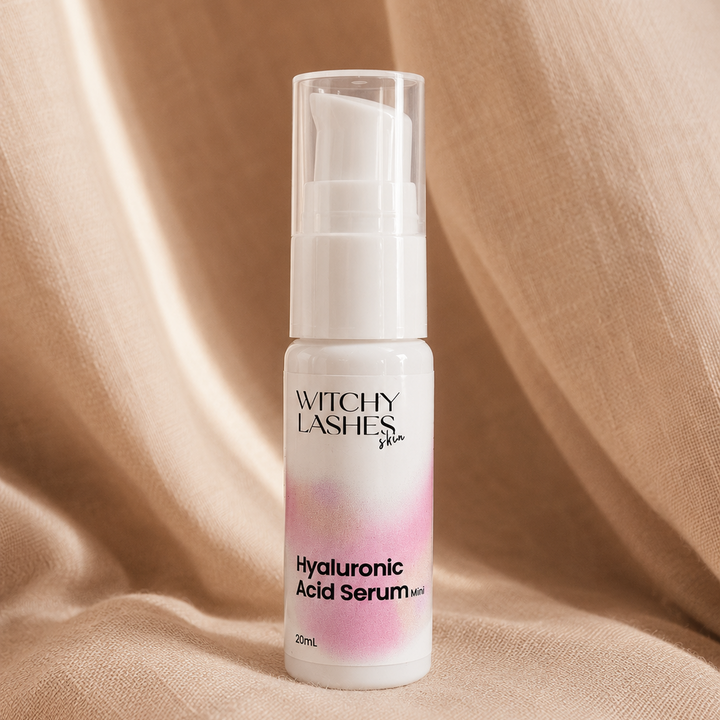
Weeks 1 and 2: calming routine only. Before reintroducing the retinoid, give skin two weeks to settle into baseline. Gentle cleanser, hyaluronic acid serum applied to damp skin, Blue Tansy Calming Facial Oil over the top to seal. Mineral sunscreen every morning. No actives. The goal is a calm, comfortable starting point, not a depleted, reactive one.
Week 3: reintroduce at one to two nights per week. Two drops of Retinyl Renewal Oil applied over the hyaluronic acid serum. Nothing else. This is more cautious than you were probably using before summer, and that is deliberate. Skin that has been through a long season deserves a slower re-entry than skin coming from a stable baseline.
Weeks 4 to 6: build to two to three nights per week. A Monday, Wednesday, Friday pattern works well: consistent enough to build visible benefit, spaced enough to let skin adjust without accumulating irritation. Continue the calming routine on the other evenings.
Week 7 onward: build to four to six nights per week as tolerated. Most women settle at four to five nights. There is no virtue in nightly use if skin does not need it. If skin is comfortable and the look of texture and tone is improving at four nights, that is the right frequency for that skin.
Sunscreen every morning, year-round, regardless of clouds or season. Mineral options (zinc oxide, titanium dioxide) tend to be the gentler choice for skin using a retinoid, particularly through the adjustment period.
If you used a retinoid through summer
A common pattern: a retinoid routine that maintained well through the cooler months starts to feel harder to sustain in January and February. Slight tightness after cleansing, mild flushing that lingers, increased sun sensitivity, skin that seems to need more moisture than usual. Women often attribute this to summer skin in a general sense, when it is actually a combined load: retinoid-increased UV sensitivity stacked on top of a high-UV season, combined with heat, barrier disruption from swimming, and lower indoor humidity.
If this describes your summer, the most useful thing you can do now is pause and recalibrate rather than push through. Two weeks of calming routine only, the same approach as the restart protocol above: gentle cleanser, hyaluronic acid serum on damp skin, calming oil to seal. This is a clean reset, not giving up.
When you restart, begin at half the frequency you were using before summer. If you were at four nights per week, come back at two. Build back by adding one night per fortnight rather than one night per week. The slower build may feel frustrating, but skin that restarts carefully tends to reach a higher, more stable frequency by winter than skin that restarts aggressively and has to pull back again.
This kind of recalibration tends to leave skin in a better long-term place. A pause with intention is not a setback. It is good skin stewardship.
Autumn is generally a sensible restart window, but some situations take priority: active significant skin reactivity (run 4 to 6 weeks of calming routine first); pregnancy or breastfeeding (no retinoid recommended: hyaluronic acid serum on damp skin sealed with a fragrance-free moisturiser is the calmer option); active cancer treatment (speak with your treating clinician first); recovering from an in-clinic procedure (follow your clinician's aftercare timeline); active flare of eczema, perioral dermatitis or rosacea (hold until settled and your GP is comfortable); using prescription retinoids (speak with your prescribing doctor before adding a cosmetic vitamin A). healthdirect.gov.au and the Australasian College of Dermatologists A to Z of Skin are the AU resources.

I started writing this article in April, looking out at a Sydney autumn that had finally arrived after a long, hot summer. My own face had spent the season in the usual rhythm. Beach days with my daughter. Sunscreen used carefully, but still never quite as perfectly as I imagined I would. Days that ended with sand in odd places and skin that still felt warm after the evening had cooled. By March, the woman in the mirror had that faint, soft tiredness across her face that always tells me summer has been a lot. My skin was not failing. It was simply showing me what the season had been.
The first autumn evening I went back to my retinoid routine, after two weeks of just calming and hydrating, felt like a small marker. Not a dramatic reset. Just the quiet reassurance of being back in a routine I trust, in a season my skin is genuinely more ready for. That is what I want to offer every woman reading this. If your skin has been through a hard summer, autumn can be the moment to come back gently. Not with the strongest active you can find. Not trying to undo a whole season in a week. Just with a calm, evidence-led routine that makes sense for the years, not the panic of the moment. Vitamin A in autumn makes biological sense. It makes seasonal sense. And, honestly, it makes emotional sense too: a way of saying to your face, I see what you have been through, let us support you properly now.
Frequently asked questions
When is the best time to start a retinoid in Australia?
Should I stop using retinol in summer in Australia?
Why does my retinol seem less effective in summer?
Can I use vitamin A and sunscreen together?
How long should I pause before restarting in autumn?
Will an autumn restart give me back the skin I had before summer?
Can I start a retinoid for the first time in autumn?
What if I am reading this in spring or summer and want to start now?
The Renewal Ritual
Retinyl Renewal Oil, Hyaluronic Acid Serum, and Blue Tansy Calming Facial Oil: the three steps built for the autumn restart and the year that follows.

Where to next
References
- Antille C, et al. Topical vitamin A applied to human skin absorbs UVB. Journal of Investigative Dermatology. 2003.
- Shu WY, et al. Retinyl palmitate reduces UVB-induced skin photoageing. Frontiers in Pharmacology. 2023.
- Mukherjee S, et al. Retinoids in the treatment of skin aging. Clinical Interventions in Aging. 2006.
- Sorg O, et al. Retinol and retinaldehyde: mechanisms of action and clinical applications. Dermatologic Therapy. 2006.

