

What "suddenly sensitive" usually means
The word sensitive gets used for a few different things, and they are worth separating.
Genuinely sensitive skin is usually a long-term pattern, often beginning early in life. That skin tends to react to many things across many years: fragrance, certain ingredients, weather changes, fabrics, heat, cold. It is part of how that skin is built.
Sensitised skin is different. This is skin that was once quite tolerant, but has recently become reactive because something has changed. That change might be over-exfoliation, a new product, hormones, stress, climate, a procedure, or simply too much happening at once.
Most women who say "my skin is suddenly sensitive" are describing sensitised skin. Their skin was fine. Now it is not. Something has shifted.
That distinction matters because sensitised skin can often settle again. It needs a pause, a simpler routine, and time. Genuinely sensitive skin usually needs that same kind of gentleness, but more as an ongoing way of caring for the skin rather than a short reset.
The eight common reasons skin suddenly feels sensitive
There is rarely one dramatic cause. More often, a few small changes quietly add up.
- Over-exfoliation. This is one of the most common reasons skin suddenly feels reactive. Acids, retinols, scrubs, exfoliating tools, peel pads or exfoliating cleansers can be fine on their own, but too much too often can leave skin tight, shiny, stingy and easily upset.
- A new product. Sometimes it is the whole product. Sometimes it is one ingredient inside it: fragrance, essential oils, preservatives or a particular active. Reactions can also appear days or weeks after introducing something new, which makes the link harder to spot.
- Perimenopause and menopause. As oestrogen shifts, skin can become thinner, drier and less tolerant. Many women notice they can no longer use the same retinol, vitamin C, exfoliant or foaming cleanser they used comfortably in their thirties.
- Postpartum and breastfeeding. Hormones drop sharply after birth, and skin can feel different for months. Some women find their skin becomes more reactive during breastfeeding or after weaning.
- Stress, sleep debt and burnout. Stress affects immune function, skin barrier function, inflammation and sleep. Many women notice their skin looks reactive before they fully realise how stretched they are.
- Climate and environment. Strong UV, hot outdoor air, low-humidity air-conditioning, salt water, pool chlorine, wind, and the constant move between hot outside and cool inside can leave skin feeling reactive for a whole season.
- After a procedure. Facials, microneedling, chemical peels, laser, waxing, threading, dermaplaning and some hair-removal treatments can leave skin more reactive for days or weeks. Aftercare matters.
- The start of a medical condition. Rosacea, perioral dermatitis, eczema and contact dermatitis can all begin by feeling like sudden sensitivity. If your skin does not settle after a simpler routine, it is worth getting a GP to look.
Once you can name the likely trigger, the next step usually becomes much clearer.
For sensitised skin, two to four weeks of a stripped-back routine is often enough to see a clear shift.
What not to do
Reactive skin is where kind intentions can accidentally make things worse.
Do not add a whole new soothing routine. A new mist, mask, cream, serum and balm might feel like care, but reactive skin often reacts to the extra contact and the extra ingredients. The reset is about less.
Do not rush into a new barrier product. Many of these products are excellent, but if your skin is already reacting, even a good product can be too much at the wrong moment. Keep things simple first.
Do not exfoliate the flaky bits. Flaking is often a sign that the skin is stressed. Scrubbing or using acids over that surface can keep the cycle going.
Do not stack actives to find the one that works. Retinol, vitamin C, AHAs, BHAs and exfoliating treatments all ask more of the skin. Bring them back later, one at a time, after your skin is calm.
Do not switch cleansers every few days. It makes it impossible to know what is helping. Choose one gentle cream-based or oil-based cleanser and stay with it for at least two weeks.
Do not panic-buy a long routine. Sensitive-feeling skin usually does not need more products. It needs fewer, gentler products used consistently.
The gentle calming routine
The job is simple: add water, slow water loss, protect the skin, and stop asking it to handle unnecessary extras.
Morning
- Rinse with cool to lukewarm water, or use a gentle cream-based or oil-based cleanser.
- Pat your skin damp, not dry.
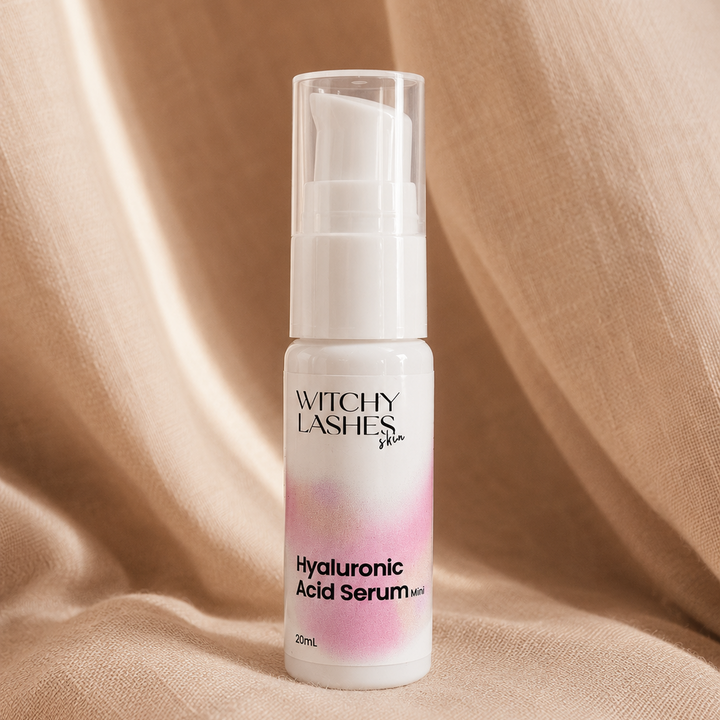
- Within sixty seconds, press in a few drops of Hyaluronic Acid Serum on damp skin. Hyaluronic acid is a humectant that binds water in the upper layer of skin and has been shown to improve hydration in topical applications (Bukhari et al., 2023). The Witchy serum is a three-ingredient formula with no active ingredients, fragrance or essential oils, so it gives reactive skin very little to argue with.
- Wait about thirty seconds.
- Press in two to three drops of Blue Tansy Calming Facial Oil over the top. The oil contains chamazulene, a compound with documented antioxidant effects in laboratory studies (Slon et al., 2024).
- Apply mineral sunscreen as your final step.
Evening
- Cleanse gently.
- Pat damp.
- Apply hyaluronic acid serum within sixty seconds.
- Wait about thirty seconds.
- Press in three to four drops of facial oil.
That is the whole routine. If you would like both products together, the Renewal Ritual brings them into one simple pairing.
Reactive skin is usually low on water, more easily irritated, and being asked to do too much. The serum gives it a water step. The oil helps slow that water from leaving. Sunscreen protects what is settling. Nothing else gets added until your skin is calm again.
How long it usually takes
Knowing what to expect makes it easier not to interfere.
Days one to three. You may not see much change yet. Your skin may still feel reactive. This is the part where you do less, even though you want to do more.
Days four to seven. Stinging often settles first. By the end of the first week, your serum and oil should feel more comfortable to apply.
Days seven to fourteen. Tightness usually starts easing. Flaking, if there was any, begins to settle. Redness may look less obvious. Your skin starts to feel more like itself.
Days fourteen to twenty-eight. Most sensitised skin should look and feel calmer. Makeup sits better. Sunscreen feels less uncomfortable. The reactive feeling reduces.
If your skin is still very reactive after four weeks, it is probably not just sensitisation. A GP appointment is the right next step.
When to see a GP
Sensitised skin usually responds to a quieter routine. Skin that does not respond may be telling you something more specific is happening. See a GP if your skin has been reactive for more than four weeks despite a stripped-back routine; if you have persistent redness in distinct patches especially around the cheeks, nose or jaw; small raised bumps around the mouth, nose or eyes; skin that itches, weeps or cracks; reactivity that worsens over time; flushing in response to triggers like wine, hot showers, spicy food, exercise or stress; or a family history of rosacea, eczema or other skin conditions where the pattern looks familiar.
healthdirect.gov.au has plain-English guides on rosacea, eczema, perioral dermatitis and contact dermatitis, plus a registered nurse you can call any time of day. The Australasian College of Dermatologists A to Z of Skin is the Australian specialist resource for condition-specific information.
A note from Marcha
The line I read most often in the inbox is some version of this: "I never had sensitive skin in my life, and now everything reacts."
Usually, the woman writing has not changed everything. It is rarely that simple. It might be one new vitamin C serum, a different cleanser, retinol added around a birthday, or an exfoliant used a little more often than before. Or it might be the body changing underneath: perimenopause arriving quietly, a baby finishing breastfeeding, a long season of poor sleep, or stress that has been sitting in the background for months.
Skin notices those things. It does not have many ways to speak, so it uses the ones it has. Tightness. Heat. Stinging. Redness. The feeling that every product is suddenly too much.
The most useful thing I have learned, both on my own face and through years of customer letters, is that reactive skin almost always asks for less. Not no care. Just less noise. Pull back. Pause the actives. Keep the steps gentle and consistent. Give your skin time to do the work it already knows how to do.
Two products, twice a day, for a few weeks. Sleep where you can. Water. Sunlight. A GP appointment if it does not settle. That is the whole approach.
Marcha, Founder of Witchy Lashes Skin
Common questions
Why is my skin suddenly sensitive?
There is almost always a reason. The most common are over-exfoliation, a new product or active, perimenopause, postpartum hormonal shifts, stress, climate, a recent procedure, or the start of a skin condition. Look at what changed in your routine, hormones or environment over the last two to three months.
Can sensitive skin go back to normal?
Sensitised skin, meaning recently reactive skin that was not always reactive, often settles within two to four weeks of a gentler routine. Genuinely sensitive skin, meaning a long-term pattern, does not usually go away, but it can often be managed well with ongoing gentle care. If you are not sure which one yours is, a few weeks on a stripped-back routine can tell you a lot.
Will a facial oil make sensitive skin worse?
It depends on the oil and on your skin. Some facial oils contain strong essential oils or irritating ingredients. Others are formulated to be gentler. The Witchy Blue Tansy Calming Facial Oil is designed for sensitive-feeling skin and is used over a humectant serum. If you have known plant allergies, or your skin is in an active flare, patch test on the inner forearm for two nights first.
Should I stop all my skincare while my skin recovers?
Not entirely. You still need a gentle cleanser, hydration, a seal and sunscreen. What you should stop is anything active, fragranced, exfoliating or experimental until your skin has settled. Think fewer, gentler products, not no products at all.
Is sensitive skin the same as rosacea?
No. Sensitive skin is a broad way of describing skin that reacts easily. Rosacea is a specific medical condition that can cause persistent redness, flushing, visible blood vessels and sometimes small bumps, usually across the cheeks, nose, chin and forehead. Sensitive skin can be part of rosacea, but rosacea needs medical diagnosis and care.
Can perimenopause cause sensitive skin?
Yes, often. As oestrogen shifts, skin can become thinner, drier and more reactive. Many women notice their tolerance for active ingredients drops in their late thirties or forties. The retinol that suited you at thirty-two may not suit you at forty-two. That is not a failure of you or the retinol. It is skin changing.
How can I tell if my skin is reacting to a specific product?
If the reactivity started after introducing a particular product, start there. Pause it for two weeks and see whether your skin settles. If it does, reintroduce slowly and watch carefully. If the reaction comes back, that product, ingredient or frequency is probably not right for your skin right now. There is no shame in dropping a product, even one you used to love.
The simple pairing
The Renewal Ritual
The hyaluronic acid serum and the blue tansy facial oil, together. Water in, then sealed. The two-step routine that gives reactive skin quiet.
-
 Hyaluronic Acid Serum
-
 Blue Tansy Calming Facial Oil
References
- Bukhari, S.N.A., Roswandi, N.L., Waqas, M., et al. (2023). Hyaluronic acid, a promising skin rejuvenating biomedicine: A review of recent updates and pre-clinical and clinical investigations. International Journal of Biological Macromolecules.
- Slon, K., et al. (2024). Chamazulene: antioxidant and anti-inflammatory properties in laboratory studies. Journal of Natural Products Research.

