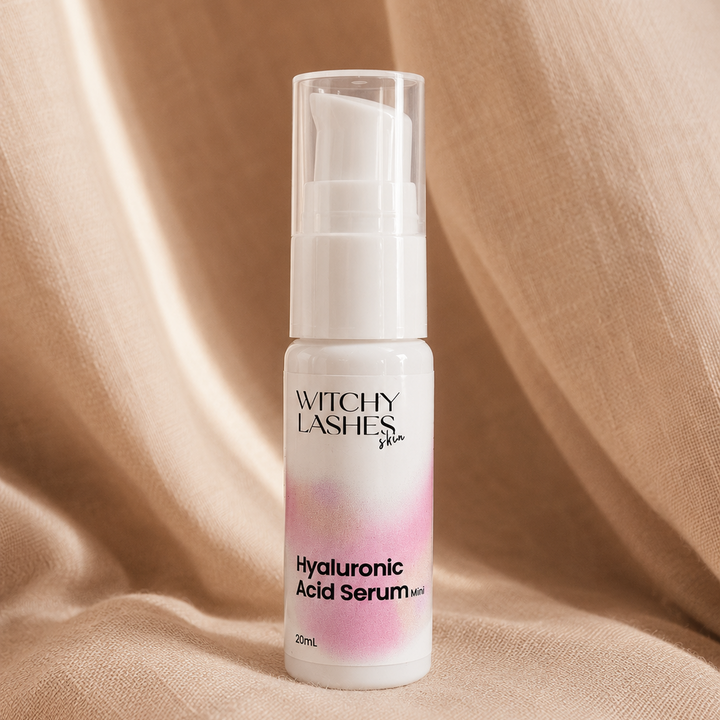


Why a humectant and an oil need each other
This is the part that makes the routine start to make sense.
A humectant like hyaluronic acid helps attract and bind water. It draws moisture into the upper layer of the skin when there is water available to draw from. That water can come from the air, from damp skin after cleansing, or, in dry conditions, from deeper layers of your own skin.
A facial oil is an occlusive. It forms a fine layer over the skin and slows water from leaving. It does not actively pull water in. It works by slowing the exit.
If you use only a humectant, in dry air with no seal over the top, two things can happen. The water you have just added evaporates faster than it should. Or the humectant starts pulling water from deeper skin layers to the surface, where it evaporates anyway, leaving your skin feeling tighter than before.
This is why some women say hyaluronic acid serums make their skin feel drier. It is not the ingredient. It is the conditions.
If you use only an oil, with no humectant underneath, you trap whatever water is already there. For someone with naturally well-hydrated skin, that might be enough. For most adult skin, especially skin that is changing, the water layer is often too thin for the oil to hold meaningfully. If your skin has started changing more noticeably, our perimenopause skin guide covers what is happening and the routine that helps.
Both halves of the routine work. They simply work best used together, in the right order.
The science, briefly
There is real research on the humectant-plus-occlusive principle.
A 2023 review looked at the literature on topical hyaluronic acid and concluded that the molecule improves skin hydration and supports the function of the stratum corneum when applied as part of a properly formulated routine (Bukhari et al., 2023).
A separate 2022 review on moisturiser formulation reported that occlusive ingredients reduce transepidermal water loss by between thirty and eighty per cent, depending on formulation (Review, 2022).
The picture across these studies is consistent. Humectants bring water in. Occlusives keep it there. Used together, they do something neither can do alone.
Adding a seal over a humectant step reduces transepidermal water loss by 30 to 80 per cent, depending on formulation.
Which order, and why
The order is humectant first, then oil. Not the oil first.
If you apply oil first, you create a barrier between the surface water on your skin and the humectant you apply afterwards. The humectant then has nothing to bind to, sits on top of the oil, and does very little.
If you apply the humectant first, on damp skin, it absorbs into the upper layers within thirty to sixty seconds. Then the oil goes on top, sealing in the water you have just added.
That is the only order that makes the routine actually work. It is also why we suggest waiting about thirty seconds between the two steps. Just long enough for the serum to settle before the oil sits over the top.
The Witchy routine, step by step

This is the version to keep simple.
Morning
- Cleanse gently. Use cool to lukewarm water, not hot.
- Pat your face damp with a soft towel. Not dripping, not bone dry.
- Within sixty seconds, press a few drops of Hyaluronic Acid Serum into damp skin. Press, do not rub.
- Wait about thirty seconds.
- Press three to four drops of Blue Tansy Calming Facial Oil over the top. Press gently, do not rub.
- Apply sunscreen as your final step.
Evening
- Cleanse gently.
- Pat damp.
- Hyaluronic acid serum first, within sixty seconds.
- Wait thirty seconds.
- Blue tansy facial oil over the top.
Some people use this routine morning and evening. Some prefer the facial oil at night only, as chamazulene (the compound that gives blue tansy its colour) can be photochemically unstable in direct sunlight. Both approaches work. We slightly prefer the oil at night.

Why the Witchy serum was designed to go under the oil
The hyaluronic acid serum is deliberately a three-ingredient formula. Purified water. Plant-based hyaluronic acid. A touch of natural preservation. No fragrance. No essential oils. No strong actives.
That matters when something else is going on top.
A serum with strong actives, retinol, vitamin C, AHAs, BHAs, can interfere with the botanical ingredients in a facial oil. The chemistry of a layered routine matters more than most of us realise. Two products that work beautifully separately can sometimes cancel each other out when stacked, or trigger reactions that neither would cause on its own.
By keeping the serum stripped back to three ingredients, we make sure it pairs well with the facial oil layered over it. There is nothing in the serum that the oil has to work around. The serum does one job, the oil does one job, and they hand off cleanly.
This is intentional formulation, not an accidental pairing. It is also why we describe the two products as a routine rather than a bundle. They were designed to work together.
Common mistakes when layering a serum and an oil
Applying the oil first. This is the most common mistake. The oil creates a barrier and the serum applied afterwards cannot reach the skin. The order is always humectant first, then occlusive.
Towel-drying too thoroughly. The serum needs surface dampness to bind to. A vigorous towel-dry takes that water away. Pat, do not rub.
Waiting too long between products. If you wait three or four minutes after applying the serum, your skin dries down completely. The oil then sits on top of skin that has already lost its moment of dampness. Thirty seconds is enough.
Using too much oil. Three to four drops is plenty for the whole face. More than that, and the oil sits on the surface, feels heavy, and can pill under sunscreen. The seal needs to be thin.
Skipping the humectant step. The most common reason a facial oil "does not work" is that it was used on dry skin with no humectant underneath. The oil is doing the right job, but there is no water underneath for it to seal in.
Using a heavily active serum underneath. Vitamin C, retinol or strong acids underneath a facial oil can sometimes cause reactions or interactions you would not have had with either product alone. If you are using actives, consider using them on separate evenings from the calming routine, or applying them well before the calming step.
When this routine is not right for you
The two-product routine is gentle, but it still is not right for every person or every season of skin.
During pregnancy or breastfeeding
The Blue Tansy Calming Facial Oil contains essential oils. We do not recommend it during these windows. The hyaluronic acid serum on its own, sealed with a simple fragrance-free cream, is the gentler approach during this time.
During active cancer treatment
Please speak with your treating clinician before adding essential-oil-containing skincare. Many oncology teams recommend avoiding essential oils during active chemotherapy, radiation or immunotherapy.
If you have a known ragweed, chamomile or feverfew allergy
Blue tansy is in the same Asteraceae family. Patch test on the inner forearm for forty-eight hours before applying to the face.
If your skin is in active eczema or perioral dermatitis flare
A heavier oil can sometimes make these conditions worse. Use the serum alone while your skin is settling, sealed with a simple cream your GP is comfortable with.
If you are using prescription topicals like tretinoin
Speak with the prescribing doctor before layering anything over them. Prescription actives often have specific application protocols.
Common questions
Can I use a hyaluronic acid serum and a facial oil together?
Yes. They are actually better together than either is alone. The serum brings water into the upper layer of the skin. The oil slows that water from leaving. Together, they do something neither can do on its own.
Should I apply facial oil before or after my serum?
After. Always. The humectant serum goes first, on damp skin, so it has water to bind to. The oil goes over the top about thirty seconds later, sealing the water in. Applied the other way around, the oil creates a barrier the serum cannot get through.
How long should I wait between the serum and the oil?
About thirty seconds. Long enough for the serum to absorb into the skin, short enough that your skin is still slightly damp when the oil goes on. If you wait longer than a minute, the skin can dry down too much and the oil sits on top rather than sealing properly.
Can I use this routine if I have oily skin?
Yes. Oily skin can still be dehydrated, and dehydrated oily skin often overproduces more oil to compensate. A humectant on damp skin, sealed with a lightweight facial oil, can actually help oily skin feel more balanced. If a richer oil feels like too much, two drops is often enough.
Do I need both products, or can I use just one?
For the routine to work as a routine, you need both. The humectant on its own can feel drying in low-humidity air, especially in Australian summer. The oil on its own seals very little if there is not enough water underneath for it to hold. Used together, they replace what each is missing on its own.
Can I use this routine alongside my existing skincare?
Yes, with care. The two-product routine is gentle and can fit into most existing routines. If you are using strong active ingredients like retinol, vitamin C or acids, consider using them on separate evenings, or applying them well before the calming routine. If your skin has been reactive, pause active ingredients for a few weeks and use this routine on its own while your skin settles.
How long until I see a difference?
Most people notice their skin feels softer for longer in the morning after the first night of using this routine. The deeper shift, where the tight, reactive feeling settles into something calmer, usually takes two to four weeks of consistent morning-and-evening use.
Where to next
References
- Bukhari, S. N. A., et al. (2023). Hyaluronic acid, a promising skin rejuvenating biomedicine: A review of recent updates and pre-clinical and clinical investigations on cosmetic and nutricosmetic effects. International Journal of Biological Macromolecules. PMC10078143.
- Review of occlusive moisturiser formulations (2022). Transepidermal water loss reduction with occlusive ingredient combinations. PMC9315586.

