

Blue Tansy for Skin: What It Is, What Chamazulene Does, and Who Should Not Use It
Blue tansy (Tanacetum annuum) is a small flowering plant from the Asteraceae family. The plant has bright yellow flowers. The oil, when steam-distilled, turns a deep inky blue because of a compound called chamazulene. Chamazulene has been studied for decades and has documented anti-inflammatory and antioxidant effects in laboratory and in-vitro studies (Slon et al., 2024).
There are no large human clinical trials of blue tansy oil applied to facial skin. The ingredient story is well-supported. The full topical-application story is still being filled in. Blue tansy is used in calming-feeling skincare, especially in evening routines. It is not recommended during pregnancy, breastfeeding or active cancer treatment, and people with a known Asteraceae allergy should patch test first. It is not a treatment for rosacea, eczema, perioral dermatitis or any medical condition.
What blue tansy actually is
Blue tansy is sometimes confused with three other plants, so it is worth being precise.
It is not the same as common tansy (Tanacetum vulgare), which is a different plant with different properties and is not used in skincare.
It is not the same as German chamomile (Matricaria chamomilla), although both plants produce chamazulene when distilled, and the two are sometimes blended in calming skincare.
It is not the same as blue chamomile or Moroccan chamomile, although the names are often used interchangeably in the wellness world and in marketing.
Blue tansy specifically refers to Tanacetum annuum, an annual flowering plant native to Morocco, grown commercially mostly in the north of the country. The plant itself does not look blue when it is alive. The flowers are bright yellow. The deep blue colour of the oil comes from chamazulene, which forms during the steam-distillation process.
In skincare, blue tansy oil is usually a small percentage of a wider formulation. Pure blue tansy essential oil is too concentrated to use directly on the face, and is normally diluted in a carrier oil like sea buckthorn, jojoba, squalane, or another plant oil.
What chamazulene does (what the research actually shows)
Chamazulene has been studied for several decades, mostly in laboratory and in-vitro settings.
The most useful recent paper is a 2024 review in Molecules titled "Azulene and its derivatives as potential compounds in the therapy of dermatological and anticancer diseases" (Slon et al., PMID 38731510). It concludes that the compound has documented anti-inflammatory and antioxidant effects in laboratory studies, with potential applications in dermatology. The same paper notes that azulene can be photochemically unstable, which is part of why blue tansy is better used at night than during the day.
A 2024 in-vitro study in Frontiers in Immunology (Lairikyengbam et al., PMID 38720895) demonstrated that chamazulene and the related compound alpha-bisabolol both reduced inflammatory markers in human T cells in laboratory conditions. This is some of the most direct in-vitro evidence available for chamazulene's calming activity at a cellular level.
Earlier research has also shown chamazulene has antioxidant properties, scavenging reactive oxygen species in laboratory studies. What we do not have is a large, well-designed human clinical trial of blue tansy oil applied to human facial skin.
Chamazulene and alpha-bisabolol both reduced inflammatory markers in human T cells in laboratory conditions: some of the most direct in-vitro evidence for chamazulene's calming activity at a cellular level.Lairikyengbam et al., Frontiers in Immunology, 2024
So the careful summary is this: chamazulene has well-documented anti-inflammatory and antioxidant activity in laboratory studies. Blue tansy oil is one of the most concentrated natural sources of chamazulene. The ingredient evidence is strong. The full topical product evidence is still being built. That is why we describe Blue Tansy Calming Facial Oil as "calming" rather than as a treatment for any condition.
What blue tansy is good for
Based on what the research supports, blue tansy oil is well suited to:
- Skin that feels reactive, sensitive or stressed.
- Skin that flushes in heat, wind or after exercise.
- Skin that feels tight or angry after a long day in air-conditioning.
- The look of redness after over-exfoliation, climate stress, or a busy week.
- A calming end-of-day step for skin in perimenopause that has started feeling more reactive.
- A simple, gentle seal in a routine where you are pulling back from active ingredients.
What blue tansy is not designed to do: treat rosacea, eczema, perioral dermatitis, or any medical condition; replace sunscreen; function as a daytime product (given photochemical sensitivity of azulene); treat active breakouts; or act as a heavy occlusive on its own. It works best over a humectant.
Who should avoid blue tansy
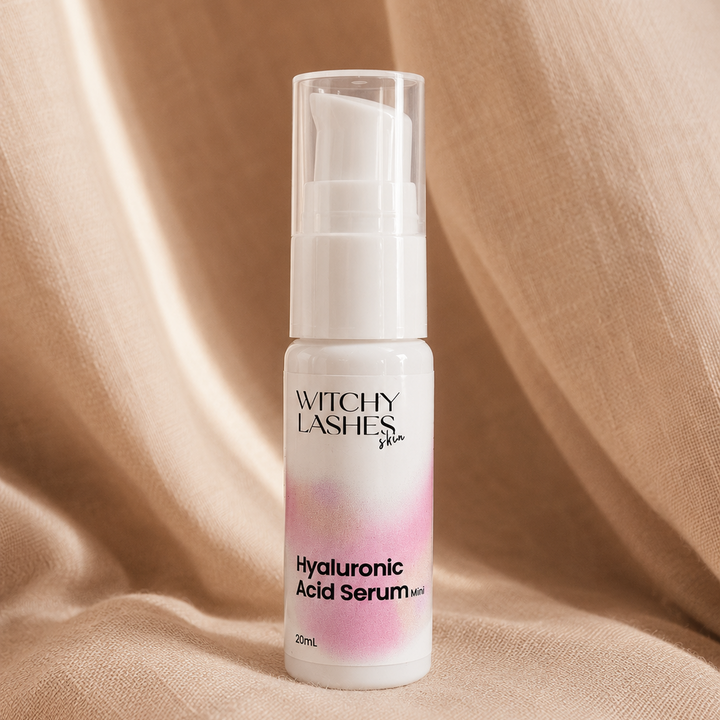
Pregnancy and breastfeeding. Blue tansy contains essential oils, and several professional bodies including UK and Australian midwifery and pregnancy advisory services recommend caution with essential oils during pregnancy. We do not recommend it during these windows. The Hyaluronic Acid Serum is a three-ingredient formula with no essential oils and is a calmer alternative during this time.
Active cancer treatment. If you are in chemotherapy, radiation or immunotherapy, many oncology teams recommend avoiding essential oils. Some treatments make skin much more reactive than usual, and some essential oil compounds can interact with specific therapies. Please speak with your oncology team before adding any essential-oil-containing skincare.
Asteraceae allergy. Blue tansy is in the Asteraceae family, the same plant family as ragweed, chamomile, feverfew, marigold and chrysanthemum. If you have a known allergy to any of those, patch test on the inner forearm for forty-eight hours before applying to your face.
Active eczema, perioral dermatitis, or significant skin reactions. A heavier oil can sometimes make these conditions worse. While your skin is in active flare, hold the oil and use just the hyaluronic acid serum, sealed with a simple fragrance-free moisturiser of your choice.
Children under 12. Essential-oil-containing skincare is not formulated for children's skin.
How to use blue tansy oil for skin
Step one: cleanse gently. Cream or oil-based cleansers are kinder than foaming cleansers for skin that has been feeling reactive.
Step two: pat damp. Leave your skin slightly damp, not bone-dry.
Step three: humectant first. Within sixty seconds of rinsing, press in a few drops of Hyaluronic Acid Serum on damp skin.
Step four: wait thirty seconds.
Step five: blue tansy facial oil over the top. Press in three to four drops of Blue Tansy Calming Facial Oil over the serum. Press it gently into the skin rather than rubbing it in.
In the morning, you can use the same approach with sunscreen as the final step. We slightly prefer the oil at night because chamazulene can be photochemically unstable in daylight, and your skin is doing most of its repair work overnight anyway.

Blue Tansy Calming Facial Oil
Rich in chamazulene from Moroccan blue tansy, diluted in a carrier oil base. Designed for the evening calming routine, used over a humectant serum.
Read the formulaHow to choose a blue tansy product
Not all blue tansy products are formulated with the same level of care. A few things to look for:
Concentration. Pure essential oil is far too strong to apply to facial skin. Look for a product that uses blue tansy diluted into a carrier oil base.
Carrier oil quality. Sea buckthorn, jojoba, squalane and rosehip are all genuinely good carriers for the face. Heavier oils like coconut can be too occlusive for reactive skin.
Country of origin. Blue tansy is mostly grown in northern Morocco. A product that names its source tends to be more careful about ingredient quality.
Ingredient list length. A facial oil is, by nature, a simple product. If the ingredient list is long and full of unfamiliar names, the formulation may be doing more than you need. Reactive skin tends to prefer fewer ingredients.
Pregnancy and contraindication transparency. A brand that clearly states who should not use the product is usually more trustworthy than a brand that recommends it for everyone.
Storage. Blue tansy oil is light-sensitive. A dark glass bottle, stored away from direct sun, will keep the oil stable for longer.
When this might be something else
A calming oil is helpful for skin that feels reactive. It is not a treatment for a medical condition. If your skin has persistent redness or visible blood vessels; small raised bumps around the mouth, nose or eyes; a rash that itches, weeps or cracks; patches that flare and settle in cycles; burning that does not ease within a few days of a gentler routine; or a reaction that started suddenly after a specific product, food or medication, please see a GP or dermatologist before relying on skincare alone.
healthdirect.gov.au has plain-English guides on rosacea, eczema, perioral dermatitis and contact dermatitis. The Australasian College of Dermatologists A to Z of Skin is the AU specialist resource for condition-specific information. A calming oil is not a substitute for a proper diagnosis.

Blue tansy is one of the few ingredients that genuinely lives up to its calming reputation in my own experience. I had been making my own skincare in my Sydney kitchen for years before I worked seriously with blue tansy. The first time I distilled chamomile from my herb garden and noticed how similar the calming quality was to commercial blue tansy oil, I started to understand why these botanicals have been used in skincare for so long. They are not new. They are quietly old.
What I appreciate about blue tansy specifically is that it does not over-promise. It is not pretending to be retinol. It is not claiming to "fix" anything. It is a botanical oil that happens to be very good at what it does, which is settling reactive-feeling skin in a way that does not push it any further. If your skin is reactive in a routine sense, blue tansy as part of a gentle two-step routine is a calm, sensible thing to add to your evening. If your skin is reactive in a way that might be a medical condition, please see your doctor first. Both answers can be true, and both are worth saying clearly. The Renewal Ritual pairs the oil with the hyaluronic acid serum, because the oil works best when there is water underneath for it to seal.
Marcha, founder of Witchy Lashes Skin
Common questions
Is blue tansy anti-inflammatory?
Chamazulene, the active compound in blue tansy oil, has documented anti-inflammatory effects in laboratory and in-vitro studies. The ingredient research is strong. Whether this translates to measurable effects on human skin in a finished topical product depends on the formulation, the concentration, and individual skin. As a skincare ingredient, the calming reputation is supported by mechanism research. As a finished facial oil, we describe it as calming rather than as a treatment.
Is blue tansy the same as chamomile?
No, but they are related. Both plants are in the Asteraceae family, and both produce chamazulene when steam-distilled. German chamomile (Matricaria chamomilla) and blue tansy (Tanacetum annuum) are sometimes blended in calming skincare for that reason. They have similar chemistry but are not the same plant.
Why is blue tansy oil so expensive?
Blue tansy is grown in a relatively small region in northern Morocco and yields a tiny amount of essential oil per plant. Combined with the labour-intensive steam-distillation process and the increasing demand for the ingredient in skincare, blue tansy is one of the more expensive botanicals to formulate with. A small percentage in a wider facial oil formulation is usually enough for its calming benefits.
Does blue tansy oil treat acne?
No. Blue tansy is not a treatment for acne. Some people find that a calming oil applied at night helps the look of post-inflammatory redness left behind by clearing breakouts, but if you have active acne, please speak with a GP or dermatologist about a treatment plan.
Can I use blue tansy on my body, not just my face?
Yes, in principle. The same calming-feeling routine works on body skin too, although facial oils are usually too expensive to use generously on a whole body. A diluted blue tansy oil can be lovely for the decolletage, the inner arms, or any area that tends to feel reactive after sun, wind or exercise.
Does blue tansy stain skin?
Pure blue tansy essential oil is deep inky blue. In a properly formulated facial oil, the colour is diluted by the carrier oil and presents as a pale aquamarine or teal. It will not stain your skin or pillowcase under normal use. If a product is heavily pigmented, that may indicate a higher essential oil concentration than is ideal for facial skin.
Why does blue tansy oil work best at night?
The chamazulene that gives blue tansy its colour can be photochemically unstable in daylight. This means it can degrade under UV. Using it at night allows the compound to do its work while you sleep, and means your face is not exposed to potential photo-degradation byproducts during the day. Your skin is also doing most of its repair work overnight, which is the right window for a calming routine anyway.
Is blue tansy safe for sensitive skin?
For many sensitive-feeling skins, yes, when used in the way described here: diluted in a carrier oil, applied at night, over a humectant, on damp skin. Patch test for forty-eight hours on the inner forearm before applying to your face if you have any concerns. Avoid if you have a known Asteraceae allergy or are pregnant, breastfeeding, or in active cancer treatment.
The Renewal Ritual
Hyaluronic Acid Serum on damp skin first. Blue Tansy Calming Facial Oil to seal over the top. The two products designed to work together.


Related reading
References
- Slon, K., Szumny, A., Nawrot-Hadzik, I., & Hadzik, J. (2024). Azulene and its derivatives as potential compounds in the therapy of dermatological and anticancer diseases. Molecules, 29(9), 2028. PMID: 38731510.
- Lairikyengbam, S., et al. (2024). Chamazulene and alpha-bisabolol modulate inflammatory cytokine expression in human T cells in vitro. Frontiers in Immunology, 15. PMID: 38720895.

