

Jawline breakouts in your forties can feel deeply unfair. You thought you had finished with this years ago. Now there are clusters of inflamed spots along your jaw and chin, often deeper, slower to settle, and more persistent than the breakouts you remember from your teens. The pattern is real, and it is documented. This article is one part of our full guide to perimenopause skin, which covers what changes and the routine that helps.
What is happening in perimenopausal acne
The breakouts on your jawline in your forties are not the same as the acne you may have had as a teenager. The mechanism is different, the location is different, the lesion type is different, and the management is different.
The hormonal driver is different. Teenage acne is largely driven by the surge of androgens at puberty. Perimenopausal acne is driven by the shift in the oestrogen-to-androgen ratio as oestrogen declines. Androgens have not necessarily increased, but their relative influence on the skin has increased, because there is less oestrogen to balance them.
The location is different. Teenage acne distributes across the upper face. Perimenopausal acne concentrates on the lower face: jawline, chin, around the mouth, sometimes extending to the neck. A dermatologist can often identify hormonal adult acne from the distribution alone.
The lesion type is different. Perimenopausal acne tends to produce deeper, inflammatory lesions rather than the surface comedones of adolescence. The breakouts are often cystic, sometimes painful, often slow to resolve, and more likely to leave post-inflammatory hyperpigmentation.
The surrounding skin is different. Teenage skin is generally oily, robust, and recovers quickly. Perimenopausal skin is often a complicated combination of drier overall skin with oily patches along the jaw, more reactive barrier, and slower recovery from inflammation.
A 2019 review in the International Journal of Women's Health (Khunger and Mehrotra, 2019) confirmed that the combination of stripping cleansers, drying spot treatments, and stronger exfoliation that managed teenage acne can compound the problem in perimenopausal skin: triggering more sebum production, more inflammation, and more barrier disruption.

Why the teenage acne routine tends to make things worse
The stripping routine produces three problems on a perimenopausal baseline. It triggers more sebum production locally when you strip the lipid layer. It dries the rest of the face, which does not need stripping. And it disrupts the barrier in ways that take longer to recover on perimenopausal skin than on teenage skin.
The approach that works for perimenopausal acne is generally the opposite of what worked for teenage acne. Less stripping. Less drying. More hydration. More barrier support.
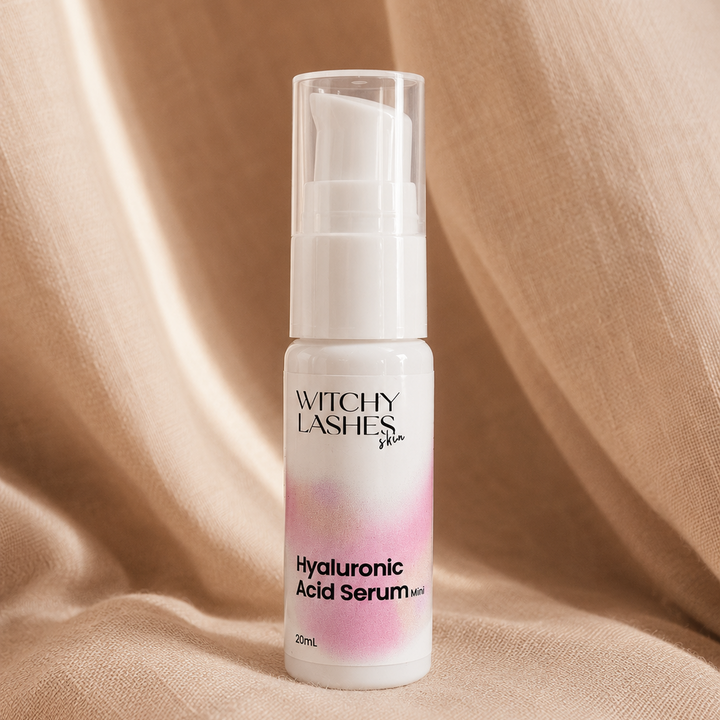
The Witchy Hyaluronic Acid Serum and Blue Tansy Calming Facial Oil are the two foundation products for this approach: a minimal humectant to support hydration without actives, and a calming oil to support the barrier while the skin finds a steadier baseline.
What the research suggests can support the skincare side
There is no cosmetic skincare ingredient that treats acne. We need to be honest about this. Acne is a medical condition, and the only ingredients with strong evidence for treating it are prescription medications, which belong in a conversation with a GP or dermatologist.
What cosmetic skincare can do is support the appearance of skin where breakouts have been a pattern. The ingredients with the strongest support for this in perimenopausal skin are gentle vitamin A, a hydrated baseline, and a calming layer.
Women experiencing perimenopausal acne often try the routines that worked in their teenage years and find those routines make things worse rather than better, due to the different skin baseline and lesion type of hormonal adult acne.
Gentle vitamin A. Retinoids influence cell turnover and have been studied for their effects on the appearance of skin where comedonal and inflammatory acne has been a pattern (Mukherjee et al., 2006). For perimenopausal skin, the form of vitamin A that suits the more reactive barrier is retinyl palmitate rather than retinol or retinaldehyde. Used two to four nights a week, on damp skin under a hyaluronic acid serum, it can support the appearance of clearer-looking skin over months of consistent use.
Hydration. Counterintuitive in an acne context, but important. Hydrated skin is calmer skin. Over-stripped skin produces more oil. The hyaluronic acid serum on damp skin twice a day is a foundation step in any perimenopausal routine, including one where breakouts are part of the picture.
A calming layer. A calming facial oil over the hydration step supports the barrier and may help reduce the inflammatory load on the skin. The Blue Tansy Calming Facial Oil's chamazulene content has documented calming and antioxidant activity in laboratory studies (Slon et al., 2024). Used as the seal step in the routine, it supports a calmer overall skin baseline.

What tends not to help for perimenopausal acne
Drying spot treatments. Benzoyl peroxide, salicylic acid in high concentrations, sulphur-based spot treatments, and alcohol-based products all rely on drying out the affected area. On perimenopausal skin where the surrounding face is already drier than it used to be, the drying effect spreads beyond the spot and worsens the baseline.
Foaming and acne-formulated cleansers. Built for teenage skin that produces excess oil across the whole face. They strip a perimenopausal skin barrier that is not in that condition.
Aggressive exfoliation. Glycolic acid above 5%, scrubs, and weekly chemical peels all disrupt a barrier that is already more fragile in perimenopause. At most, once a week with a gentle exfoliant, and only after three months on a settled routine.
Hot water on the face. Increases inflammation, disrupts the barrier. Cool to lukewarm only.

The three-product routine for perimenopausal acne
Every morning: gentle cleanse with cool to lukewarm water (cream or oil-based, not foaming), pat damp, Hyaluronic Acid Serum within sixty seconds, wait thirty seconds, a few drops of Blue Tansy Calming Facial Oil, mineral sunscreen as the final step.
Retinoid evenings (two to four per week): gentle cleanse, pat damp, hyaluronic acid serum within sixty seconds, wait thirty seconds, two to three drops of Retinyl Renewal Oil. Nothing else.
Calming evenings (the rest of the week): gentle cleanse, pat damp, hyaluronic acid serum within sixty seconds, wait thirty seconds, three to four drops of blue tansy calming facial oil.
This routine sits alongside any prescribed acne treatment your GP or dermatologist has recommended. It does not replace it.
🌿 When to see a GP or dermatologist
Perimenopausal acne is one of the topics where the line between skincare and medical care matters most. Please see a GP or dermatologist if any of the following apply:
- Your breakouts are cystic: deep, painful, slow to resolve.
- Your breakouts are leaving scars or significant post-inflammatory hyperpigmentation.
- Your breakouts have not responded to three to six months of a consistent gentle skincare routine.
- Your breakouts are affecting your wellbeing, confidence, sleep, or daily life.
- You are considering prescription options (topical retinoids, topical antibiotics, hormonal treatments).
The Australian Menopause Society has a find-a-doctor tool. Jean Hailes is the leading Australian women's health resource. The Australasian College of Dermatologists A to Z of Skin has a find-a-dermatologist tool. For American readers: American Academy of Dermatology.
A note from Marcha
I want to say something honest about perimenopausal acne. This is the topic I get most careful about getting wrong.
Acne is a medical condition. Many of the women writing to Witchy about jawline breakouts in their forties have been quietly dealing with this for months or years, often feeling embarrassed, often feeling like they should have been past this by now, often having tried every skincare approach they could find.
The most useful thing I can do as a skincare brand is be clear about what skincare can and cannot do here. It can support a calmer baseline. It can hydrate skin that has been over-stripped by stronger acne routines. Gentle vitamin A can, over months, support the appearance of clearer-looking skin. What skincare cannot do is replace treatment for acne. The medical options exist for a reason, and they are often the right answer for adult acne that is persistent or affecting wellbeing.
The Witchy Skin range is a supportive routine for skin in transition, including skin where breakouts are part of the picture. The Blue Tansy Calming Facial Oil supports the inflammatory load. The hyaluronic acid serum keeps the dehydration in check. The retinyl oil, used patiently over months, supports cell turnover gently. If you are dealing with persistent jawline breakouts, the most useful thing you can do this week is book a GP appointment. The skincare can sit alongside whatever you decide with your doctor.
Marcha, Founder of Witchy Lashes Skin
Common questions
Why am I getting acne on my jawline in my forties?
The most common driver is the shift in the oestrogen-to-androgen ratio in perimenopause (Khunger and Mehrotra, 2019). As oestrogen declines, the relative influence of androgens on the sebaceous glands increases, particularly along the lower face. This produces deeper, inflammatory breakouts concentrated on the jawline, chin, and sometimes neck.
Is perimenopause acne the same as teenage acne?
No. The hormonal driver is different (oestrogen decline vs androgen surge at puberty), the location is different (lower face vs upper face), the lesion type is different (deeper inflammatory vs surface comedonal), and the surrounding skin baseline is different (drier and more reactive vs oily and robust). This is why the routines that worked for teenage acne often make perimenopausal acne worse.
Should I use stronger retinol for perimenopausal acne?
Most often, no. Stronger retinoids are more likely to trigger reactivity in the more fragile perimenopausal barrier, and reactivity can compound the inflammatory load that drives the deeper acne lesions. For perimenopausal skin, retinyl palmitate is the gentler approach and is more likely to be sustained consistently over the months that vitamin A needs to produce visible change. Prescription topical retinoids (tretinoin, adapalene) are an option to discuss with a GP, but they are medical decisions, not skincare ones.
How long until perimenopause acne improves with skincare?
The honest answer is months, not weeks, and the improvement is usually gradual. The calmer baseline that supports the appearance of clearer skin generally takes three to six months of consistent gentle skincare to settle into. If your breakouts are still active and persistent after this period, the most helpful next step is a GP appointment to discuss medical options. Skincare can support a calmer baseline, but it does not resolve the underlying hormonal driver.
When should I see a doctor about perimenopause acne?
If your breakouts are cystic, painful, scarring, or affecting your wellbeing. If they have not responded to three to six months of a consistent gentle skincare routine. If you have a family history of significant adult acne. If you are considering prescription options (topical retinoids, antibiotics, hormonal treatments). Or if you have other perimenopause symptoms alongside the breakouts that are affecting your life. Adult acne is a medical condition and there are evidence-based treatment options worth discussing with a GP.
The perimenopause three
The three products referenced through this article, as a complete perimenopause skincare routine.
-
 Hyaluronic Acid Serum
-
 Blue Tansy Calming Facial Oil
-
 Retinyl Renewal Oil

