

If your sleep has become lighter, more broken or less restorative in your forties, and your face has started showing it in ways makeup does not quite hide, the connection is real. This article is one part of our full guide to perimenopause skin, which covers what changes and the routine that helps.
Sleep disruption is one of the most common experiences of perimenopause. A 2025 Australian study published in The Lancet Diabetes and Endocrinology (Davis et al.) surveyed more than 8,000 Australian women across the menopause transition and found sleep disturbance among the most prevalent symptoms reported.[1] The reasons are layered: hormonal fluctuation, night sweats, cortisol rhythm changes, anxiety, and stress.
Skin notices this. Poor sleep shifts the cortisol rhythm, and cortisol affects barrier function, inflammation, and recovery from environmental stress. A 2015 study (Oyetakin-White et al.) measured the appearance consequences of poor sleep quality and found real, measurable effects on barrier recovery and visible signs of ageing.[3]
The honest answer: skincare is supportive, not primary. The bigger work is sleep itself. A barrier-supportive routine helps skin hold steady while the rest of you catches up.
This article walks through the sleep-cortisol-skin loop in perimenopause, what skincare can and cannot do, and where the clinical conversation belongs.
The sleep-cortisol-skin loop
The connection between sleep and skin is not a metaphor. It is a measurable biological loop that involves cortisol, the inflammatory system, and the skin barrier directly.
Cortisol follows a daily rhythm
In a well-rested body, cortisol levels are highest in the morning, gradually decline through the day, reach their lowest point around midnight, and begin rising again in the early hours. This rhythm coordinates with sleep stages, body temperature, and overnight recovery processes.
Disrupted sleep disrupts the rhythm
When sleep is fragmented, when night sweats wake you repeatedly, or when sleep onset is difficult, the cortisol curve flattens. Cortisol stays elevated when it should be low. Recovery processes that depend on the low-cortisol overnight window do not happen as completely.
Elevated cortisol affects the skin barrier
A 2005 study in the Journal of Investigative Dermatology (Choi et al.) confirmed that elevated cortisol disrupts barrier function, slows recovery from barrier disruption, and increases water loss through the skin surface.[2]
Cortisol affects collagen synthesis
Chronically elevated cortisol downregulates collagen production in the skin. Combined with the perimenopausal collagen decline already happening through the hormonal transition, the effect compounds. Poor sleep in perimenopause is contributing to the same biological process as the hormonal changes.
"Poor sleepers showed reduced skin barrier recovery, increased signs of intrinsic skin ageing, and lower self-reported skin satisfaction compared to good sleepers."
Oyetakin-White et al., Clinical and Experimental Dermatology, 2015[3]The loop closes on itself. Poor sleep elevates cortisol. Elevated cortisol disrupts the barrier. A disrupted barrier produces more visible signs of fatigue. The visible fatigue contributes to the worry that affects sleep further. The loop becomes a pattern that can sustain itself for months.
In perimenopause, the loop is amplified because the underlying sleep architecture is being disrupted by hormonal fluctuation in addition to the cortisol pathway. The same sleep loss has more skin consequences in perimenopausal skin than it did in younger skin.

What perimenopause specifically changes about sleep
A few specific patterns characterise perimenopausal sleep disruption. Recognising them is useful because the interventions for each one differ.
Night sweats and hot flushes interrupt sleep. Vasomotor symptoms are one of the better-known features of perimenopause, but their impact on sleep is often underestimated. A single hot flush that wakes you at three am can interrupt the deeper sleep stages and prevent the full overnight recovery cycle from completing.
Hormonal fluctuation affects circadian timing. Oestrogen and progesterone both influence the circadian system. As they fluctuate in perimenopause, the timing of natural sleepiness and wakefulness can shift. Some women find they cannot fall asleep at their usual time. Others wake earlier than they used to.
Anxiety and mood changes affect sleep onset. Perimenopause is associated with increased rates of anxiety in some women. Anxiety tends to amplify in the evening and at night, making sleep onset more difficult.
The general life context adds load. Many women in perimenopause are at the busiest point in their adult lives: career responsibilities, ageing parents, teenage or young adult children, financial obligations, and the cumulative tiredness of decades of carrying a household. The stress load is real and contributes to the sleep disruption.
The combination of these factors means perimenopausal sleep is rarely a single-cause problem. It is usually a layered one, which is why it benefits from a layered approach rather than a single intervention.
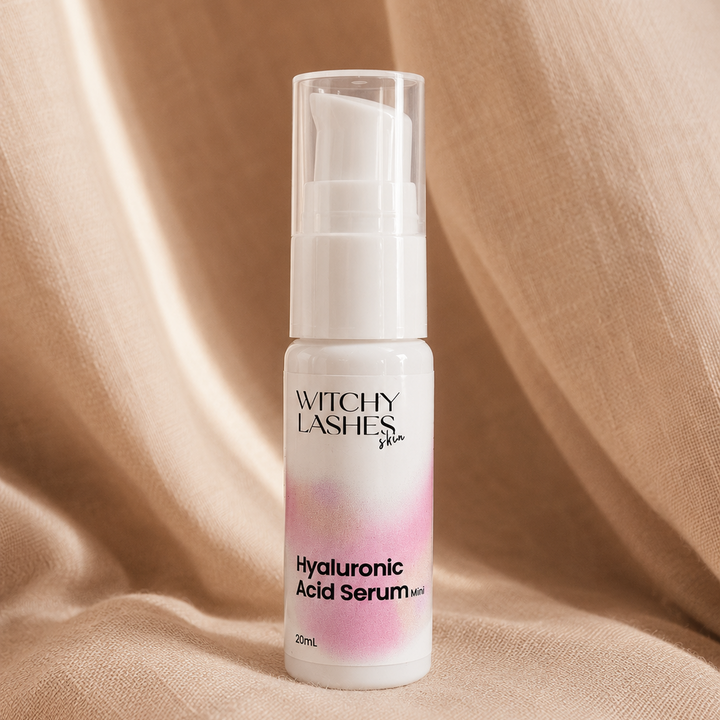
Witchy's Hyaluronic Acid Serum applied to damp skin within sixty seconds of cleansing is the foundation step for the appearance of brighter, plumper skin on the mornings that need it most.
See the Hyaluronic Acid SerumWhat skincare can actually do
This is where honesty matters. Skincare cannot fix sleep. It cannot lower cortisol meaningfully. It cannot resolve the hormonal pattern driving the sleep disruption. The primary work is medical, clinical, and lifestyle. Skincare is downstream support.
What skincare can do is help the skin look and feel more recovered the morning after a hard night, and reduce the inflammatory load that compounds with cortisol over time.
A barrier-supportive routine recovers faster from poor sleep nights. When the skin barrier is robust, a night of poor sleep produces visible fatigue but the skin recovers within a day. When the barrier is already disrupted (as it often is in perimenopause), the same poor sleep night produces more pronounced visible fatigue and slower recovery. The barrier-supportive routine described in our piece on your skin barrier in perimenopause is the foundation here.
Hydration on damp skin supports morning appearance. The visible signs of poor sleep concentrate around dehydration, dullness, and the appearance of more pronounced fine lines. A hyaluronic acid serum applied to damp skin in the morning supports the appearance of more comfortable, hydrated skin.
A calming oil reduces the inflammatory edge. The flushing, redness and reactive feel of skin after poor sleep is partly inflammatory. Blue tansy calming facial oil has documented antioxidant activity in laboratory studies (Slon et al., Molecules, 2024),[4] which supports a calmer overall skin baseline.
A gentle evening ritual can support the sleep itself. A consistent, calm, screen-free evening skincare routine in dim light can help signal to your body that the day is winding down. The calming evening ritual is one of the better-supported components of sleep hygiene. The act of applying hyaluronic acid on damp skin, waiting thirty seconds, then layering calming oil over the top gives the body a quiet, repeated signal that the day is ending.


The Blue Tansy Calming Facial Oil is the calming layer in the Witchy routine. Used morning and evening, it supports a less reactive skin baseline. In the evening, many women find the routine itself becomes part of a calming wind-down ritual before sleep.
See the Blue Tansy Calming Facial OilWhat the actual sleep work looks like
Because this article is honest, here is a brief outline of what perimenopausal sleep generally responds to. This is not medical advice; it is the picture of where the conversation tends to lead with a GP.
Sleep hygiene basics. Consistent bedtime, cool bedroom temperature, no screens for the hour before sleep, no alcohol close to bedtime, no caffeine after midday, no large meals close to bedtime. Not glamorous, and well-supported by sleep research.
Cognitive behavioural therapy for insomnia (CBT-I). The most evidence-supported non-pharmaceutical intervention for chronic insomnia, including perimenopausal sleep disruption. Many GPs can refer to CBT-I, and there are Australian online programs available through providers like Sleep Hub and the Black Dog Institute.
Addressing vasomotor symptoms. If night sweats and hot flushes are the primary cause of sleep disruption, addressing them directly often resolves the sleep issue. This is a conversation for your GP, who can discuss lifestyle approaches, non-hormonal medications, and menopausal hormone therapy.
Menopausal hormone therapy. For some women, MHT addresses sleep disruption alongside other perimenopausal symptoms. This is a clinical decision for your GP. The Australian Menopause Society (menopause.org.au) has a find-a-doctor tool for GPs with specific menopause training.
Addressing anxiety or mood. Where anxiety or low mood is contributing to sleep disruption, addressing the mental health side is often more effective than treating the sleep symptom directly.
"The conversation with a GP about perimenopausal sleep is one of the more useful conversations you can have."
The Witchy three-product routine for skin affected by poor sleep
For the skincare side, the Witchy three-product approach with a slight emphasis on the morning routine, where the visible signs concentrate.
Every morning (more important than usual on poor sleep days):
- Gentle cleanse with cool to lukewarm water.
- Pat damp.
- Hyaluronic Acid Serum within sixty seconds. Press in firmly.
- Wait about thirty seconds.
- A few drops of Blue Tansy Calming Facial Oil.
- Mineral sunscreen as the final step.
Retinoid evenings (two to four per week):
- Gentle cleanse, pat damp.
- Hyaluronic Acid Serum within sixty seconds.
- Wait thirty seconds.
- Two to three drops of Retinyl Renewal Oil. Nothing else.
Calming evenings (the rest of the week):
- Gentle cleanse, pat damp.
- Hyaluronic Acid Serum within sixty seconds.
- Wait thirty seconds.
- Three to four drops of Blue Tansy Calming Facial Oil. The evening application can become part of a calming wind-down ritual.
When to speak with a doctor
Most of perimenopausal sleep disruption is a clinical conversation rather than a skincare one. Specifically:
- Sleep disruption affecting your daily functioning, wellbeing, work, or relationships. Chronic sleep loss has compounding consequences and your GP has options worth discussing.
- Significant anxiety, low mood, or any mental health symptoms alongside the sleep disruption.
- Other perimenopausal symptoms affecting your life (significant hot flushes, joint pain, cognitive changes, fatigue). The full pattern is worth discussing with someone who can see it whole.
- If you are weighing menopausal hormone therapy, this is a clinical decision for your GP with menopause training. The Australian Menopause Society has a find-a-doctor tool. Jean Hailes is the leading Australian women's health resource.
- If you have signs of sleep apnoea (loud snoring, waking gasping, witnessed pauses in breathing), this needs separate clinical assessment.
For Australian readers, healthdirect.gov.au has plain-English guides on sleep and perimenopause. I am not the right person to advise on sleep, cortisol, mental health, or the systemic perimenopause picture. I am the right person to write the calm skincare routine that supports skin on the hard mornings, and to point clearly to a GP for the conversations that matter most here.
A note from Marcha
I want to be honest about what skincare can and cannot do here.
The sleep changes of perimenopause are one of the harder parts of this season of life. Many of the women writing to Witchy describe months or years of fragmented sleep, of waking exhausted, of trying to function at the demanding pace their life requires while running on chronic sleep deficit. The skin they bring into the bathroom in the morning is the visible surface of all of that, and the temptation to reach for a skincare answer is understandable.
The honest answer is that skincare is not the answer to sleep, and the most helpful thing I can do as a skincare brand is to say so clearly. The Witchy routine can support the appearance of skin that has had a hard night. It cannot fix the night itself. The conversation about the night belongs with a GP, ideally one with menopause training.
What skincare can be, particularly the evening routine, is a small calming ritual at the end of a long day. The act of pressing in the hyaluronic acid serum on damp skin, waiting thirty seconds, then layering the blue tansy oil over the top, is not a sleep treatment. It is two minutes of quiet attention that belong to you rather than to anyone else. For some women, that small ritual is part of the wind-down that supports better sleep.
If you are reading this and you are tired, the most useful next step is probably a GP appointment, not a different skincare routine. The Witchy products will be here when you are ready for them.
Marcha, Founder of Witchy Lashes Skin
Frequently asked questions
Does perimenopause sleep loss really affect your skin?
Yes, and the mechanism is documented. Disrupted sleep elevates cortisol, which affects skin barrier function (Choi et al., 2005),[2] inflammatory pathways, and collagen synthesis. A 2015 study (Oyetakin-White et al.) measured the appearance and barrier function consequences of poor sleep quality and confirmed real, measurable effects.[3] The visible morning-after fatigue is biological, not imagination.
What is the cortisol-skin connection in perimenopause?
Cortisol follows a daily rhythm in well-rested bodies (high in the morning, low overnight). Sleep disruption flattens this curve, keeping cortisol elevated when it should be low. Chronically elevated cortisol disrupts barrier function, dysregulates the inflammatory response, and downregulates collagen synthesis. In perimenopause, the cortisol effects compound with the hormonal changes already happening in the skin. The combined load is what produces the more pronounced visible fatigue many women describe.
Can skincare really help with sleep-related skin changes in perimenopause?
Skincare can support the surface recovery from poor sleep nights and reduce the inflammatory load that compounds with cortisol over time. It cannot resolve the sleep disruption itself, which is the primary work. A barrier-supportive routine (hyaluronic acid on damp skin, calming facial oil, mineral sunscreen) helps skin recover faster from poor sleep and supports the appearance of brighter morning skin. The sleep itself is a clinical conversation for your GP.
Will a calming skincare routine help me sleep?
A calm evening skincare routine can be part of supportive sleep hygiene. The two-minute ritual of slow application in dim light at the end of the day can signal that the day is winding down. This is a real but small part of sleep hygiene, not a sleep treatment. The bigger sleep interventions (consistent bedtime, cool bedroom, no screens before bed, addressing the underlying perimenopausal sleep disruption with a GP) are where the actual sleep work happens.
When should I see a doctor about perimenopause sleep changes?
If sleep disruption is affecting your daily functioning, wellbeing, work, or relationships. If you are experiencing anxiety or low mood alongside it. If hot flushes and night sweats are interrupting sleep regularly. If you have other perimenopausal symptoms affecting your life. If you are considering menopausal hormone therapy. Or if you have signs of sleep apnoea. Perimenopausal sleep is rarely a single-cause problem and a GP can help you work out the layered approach that suits your picture.
Does menopausal hormone therapy help with sleep?
For some women, yes, particularly when night sweats and hot flushes are the primary cause of sleep disruption. This is a clinical decision for your GP, with multiple considerations beyond sleep. The Australian Menopause Society has a find-a-doctor tool for GPs with specific menopause training, and Jean Hailes has evidence-based information you can read before the appointment.
What is the best skincare approach for tired-looking skin in perimenopause?
The combination that supports the appearance of tired-looking skin is hydration (hyaluronic acid on damp skin), a calming layer to reduce the inflammatory edge (a blue tansy facial oil), and mineral sunscreen during the day to prevent further environmental load. The morning routine matters more than usual on poor sleep days because that is when the visible fatigue concentrates.
Can stress in perimenopause cause skin problems?
Yes, through the cortisol pathway. Chronic stress elevates cortisol, which disrupts barrier function, dysregulates inflammation, and slows recovery from skin disruption. In perimenopause, the cortisol effects compound with the hormonal changes already happening. Addressing the stress (where possible) and the perimenopausal picture with a GP is more effective than treating the skin in isolation.
If you'd like the three products together, the Witchy Skin starter set brings them into one routine at a saving.
See the starter setThe complete routine
Support for skin in a season that is asking a lot.
Hyaluronic acid to bring water in. Calming oil for the inflammatory edge cortisol leaves behind. Retinyl renewal oil for the evenings when the barrier is settled. Three products, a consistent routine, the quiet morning moment your skin benefits from.
Hyaluronic Acid Serum
 Blue Tansy Calming Facial Oil
 Retinyl Renewal Oil
Continue reading
References
- Davis SR et al. (2025). Sleep disturbance across the menopause transition: Australian Women's Midlife Years Study. The Lancet Diabetes and Endocrinology.
- Choi EH et al. (2005). Stress-induced alterations in epidermal permeability barrier homeostasis. Journal of Investigative Dermatology. doi:10.1111/j.0022-202X.2005.23669.x
- Oyetakin-White P et al. (2015). Does poor sleep quality affect skin ageing? Clinical and Experimental Dermatology. doi:10.1111/ced.12455
- Slon K et al. (2024). Blue tansy essential oil: chamazulene content and biological activity. Molecules. doi:10.3390/molecules29010191

