

The short answer
If your skin has been reactive in the past, you have not necessarily ruled out vitamin A. You may simply have ruled out the form of vitamin A you tried.
Most women who write to Witchy about retinoid reactions have tried retinol. Sometimes they have tried retinaldehyde or prescription tretinoin. They have reacted to one of these, sometimes more than one, and concluded that retinoids are not for their skin.
That is not always the full story. The form of vitamin A you used matters. The pace of introduction matters. The supporting routine matters. The state of your skin barrier at the start matters. All of these can be the actual cause of a reaction rather than the retinoid family as a whole.
Retinyl palmitate, the form Witchy uses, is significantly gentler than retinol or retinaldehyde. Research has shown it has the lowest impact on skin barrier integrity of the three main cosmetic retinoid forms (Lee et al., International Journal of Pharmaceutics, 2024). For many women who have reacted to stronger retinoids, retinyl palmitate is the form their skin can actually tolerate.
But there are also genuine situations where the right answer is not a gentler retinoid. It is to wait, pause, or choose no retinoid for now. This article covers both: when to try a gentler form and when not to use any retinoid at all.
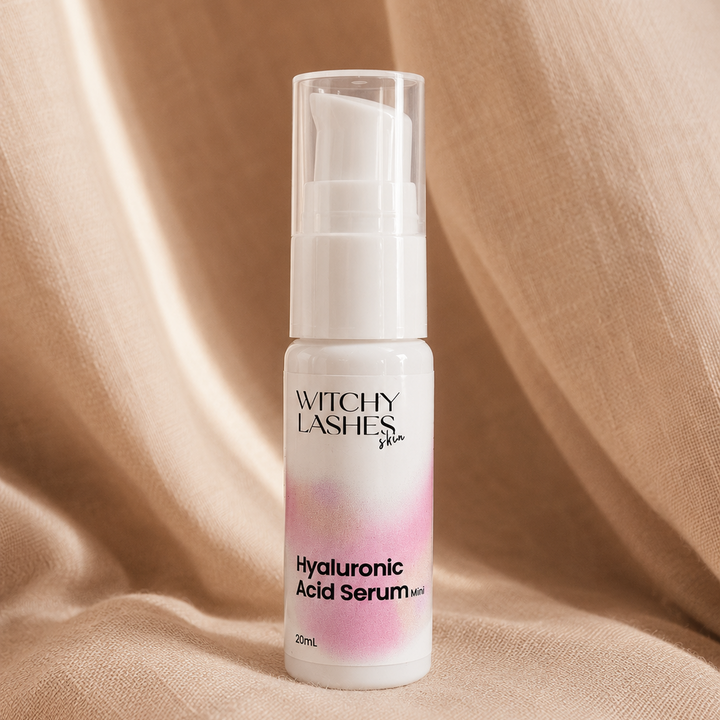
The Witchy Retinyl Renewal Oil is built for the audience this article is for. If retinyl palmitate is the right next step for you, this is the product we made for that softer entry point. If a retinoid is not the right choice right now, the Hyaluronic Acid Serum and Blue Tansy Calming Facial Oil are the calming routine that supports your skin while you wait.

What "reactive skin" actually means
The term reactive gets used for a range of different things. Before you decide whether vitamin A is right for you, it helps to know which kind of reactive you are dealing with.
Sensitised skin. Skin that has become reactive recently because of something specific that has changed. Over-exfoliation, a new active product, a recent procedure, stress, perimenopause, climate. Sensitised skin can usually be settled with a gentler routine and time, and once it has settled, a careful introduction of a gentle retinoid is often possible.
Genuinely sensitive skin. Skin that has been reactive for years, often genetically, often part of a long-standing pattern. Tolerates few products, especially fragranced or active ones. Genuinely sensitive skin can sometimes still use the gentlest retinoid (retinyl palmitate) with very careful introduction, but it requires more patience and a lower frequency than other skin.
Atopic skin. Skin with a history of eczema, hay fever, asthma, or food allergies (the atopic triad). Tends to be more reactive, particularly during flares. Vitamin A use needs medical advice and is often avoided.
Rosacea-prone skin. Skin that flushes easily and has a tendency toward persistent redness. Often does not tolerate retinoids well, particularly stronger forms. Retinyl palmitate may be possible, but a GP's input is recommended.
Skin in a current reactive state. Skin that is right now showing tightness, stinging, flushing, flaking or visible reactivity. Should not be used as the starting point for any retinoid introduction.
Knowing which category you fit into shapes what comes next. If you are in the first category, the answer is usually "settle first, then introduce gently". If you are in the third or fourth, the answer is usually "speak to a GP before starting". If you are in the fifth, the answer is always "settle the reactivity first, then reassess".
Why people react to retinoids, and what it usually means
The most common reasons for retinoid reactions are not what people assume.
The form was too strong for the skin. This is the most common cause I see. Retinol at 0.5% is significantly stronger than most first-time users realise. Retinaldehyde at 0.05% can be too much for sensitised skin. The hierarchy of strength is real, and starting with the wrong end of it causes most reactions.
The introduction was too fast. Nightly application from day one is the second most common cause. The skin needs time to build the enzymatic and receptor adaptations that make retinoid use comfortable. Twice a week for three weeks, then building gradually, is much more tolerable than nightly from the start.
The supporting routine was missing or wrong. Retinoid use on a face that does not have a calm hydration routine underneath it is always harder. Without a humectant on damp skin to support the water layer, and without a calm seal on off nights, the cumulative drying effect of a retinoid is much more noticeable.
Stacking with other actives. Vitamin C, AHAs, BHAs, niacinamide at high strengths, exfoliating treatments, all in the same week as a retinoid introduction. Each one is reasonable on its own. Together, they overwhelm.
The skin was already in a reactive state. Starting a retinoid on skin that is currently tight, stingy, flushed or flaky is a setup for problems. The skin's reactivity baseline matters before you add anything new.
Genuine sensitivity to a specific ingredient. Sometimes the reaction is not to the retinoid itself but to a fragrance, preservative or essential oil in the same product. This is harder to diagnose without changing the product.
Genuine intolerance to vitamin A. A small minority of skin genuinely does not tolerate any retinoid, even retinyl palmitate. This is real, but uncommon.
The point of this list is that "I reacted to retinol" does not always mean "my skin cannot use vitamin A". The first four items on this list are usually the cause, and all four are correctable. Only the last one suggests vitamin A may not be the right path for your skin.
Who may suit retinyl palmitate as the gentler path
Retinyl palmitate is the form most likely to suit each of the following situations.
Women who have tried retinol and reacted. Retinyl palmitate is two conversion steps further from retinoic acid than retinol. In the 1997 Duell study (Duell et al., Journal of Investigative Dermatology), retinyl palmitate required roughly twenty-four times the concentration of retinol to produce the same enzymatic effect. This is why it is so much gentler. If your skin reacted to retinol, retinyl palmitate often does not produce the same response.
Women who have tried retinaldehyde and reacted. Same principle, with an even larger gap. Retinaldehyde is the strongest cosmetic retinoid; retinyl palmitate is the gentlest. The conversion pathway is two enzymatic steps longer for retinyl palmitate.
Women in perimenopause with newly reactive skin. As oestrogen shifts, skin's tolerance for active ingredients drops. The retinoid that suited you at thirty-five may not suit you at forty-five. Retinyl palmitate is the form most often appropriate for the recalibration.
Women whose skin has been recently sensitised. Over-exfoliation, a procedure recovery period, a stressful or sleep-deprived season. Once the underlying sensitisation has settled, retinyl palmitate is the gentlest re-entry to vitamin A.
Women with rosacea-prone skin (with a GP's input). Some rosacea-prone skin tolerates retinyl palmitate. Some does not. A dermatologist or GP can advise on whether trying it is reasonable for your particular pattern.
Women in Australian climate. The cumulative UV and the indoor air-conditioning swing makes Australian skin more reactive than skin in milder climates. Retinyl palmitate is the form most likely to be tolerated through an Australian summer.
Women who simply prefer a calmer approach. Some skin is not in any of the categories above but the woman herself prefers the gentlest credible option. This is a valid choice.
Who should wait or pause entirely
There are also situations where the right answer is not a gentler retinoid. It is waiting, pausing, or choosing no retinoid for now.
Active eczema or atopic dermatitis flare. Hold any retinoid until the flare has settled and your GP is comfortable. Retinoids can worsen active flares, even in their gentlest form.
Active perioral dermatitis. Hold retinoids and consult a GP. Perioral dermatitis is a medical condition that needs treatment in its own right, not skincare experimentation.
Active rosacea flare. If your rosacea is currently flaring (visible redness, papules, pustules), hold retinoids until it has settled and a GP has been involved.
Current sensitisation. Skin that is right now tight, stingy, flushed or flaking should not be the starting point for a retinoid. Run a calming routine for two to four weeks first, until the skin is in a calmer baseline, before considering any retinoid.
Pregnancy or breastfeeding. No retinoid is recommended during these windows, including retinyl palmitate.
Active cancer treatment. Most oncology teams recommend avoiding retinoids during chemotherapy, radiation or immunotherapy.
In-clinic procedure recovery. Follow your clinician's specific aftercare timeline, which may include holding all retinoids for weeks to months.
Use of prescription retinoids. If your GP or dermatologist has prescribed a retinoid (tretinoin, isotretinoin, adapalene), do not add a cosmetic vitamin A product without speaking to them first.
Persistent unresolved reactions to multiple retinoids. If you have tried retinol, retinaldehyde and retinyl palmitate, each at appropriate pace and frequency, and each has produced a reaction that did not settle, your skin may not be in a vitamin-A-suitable phase right now. Take a longer break (six to twelve months) of calming and hydrating routine alone, and reassess later.
The calming-first protocol
If you have reacted to a retinoid in the past, or if your skin is currently reactive, the first step is not to try a different retinoid. It is to settle your skin.
This is the routine we recommend for two to four weeks before any retinoid introduction.
Morning
- Rinse with cool to lukewarm water, or use a gentle cream-based or oil-based cleanser. Skip foaming cleansers while reactive.
- Pat your skin damp, not dry.
- Within sixty seconds, press in a few drops of Hyaluronic Acid Serum on damp skin. Hyaluronic acid is a humectant that binds water in the upper layer of skin and has been shown to improve skin hydration in topical applications (Bukhari et al., International Journal of Biological Macromolecules, 2023).
- Wait about thirty seconds.
- Press in two to three drops of Blue Tansy Calming Facial Oil. The oil contains chamazulene, a compound with documented calming-feeling and antioxidant effects in laboratory studies (Slon et al., Molecules, 2024).
- Apply mineral sunscreen as your final step.
Evening
- Cleanse gently.
- Pat damp.
- Hyaluronic acid serum within sixty seconds.
- Wait thirty seconds.
- Three to four drops of blue tansy facial oil.
What to pause for the calming period
- All retinoids.
- All AHAs and BHAs.
- Strong vitamin C serums.
- Niacinamide at high strengths.
- Fragranced products.
- Foaming or stripping cleansers.
- Anything new.
- Hot water on the face.
After two to four weeks of consistent calming routine, your skin should be in a more comfortable baseline. The signs that you are ready to consider introducing a retinoid:
- Your skin no longer feels tight after cleansing.
- It tolerates your moisturiser and sunscreen comfortably.
- It has not flushed or visibly reacted in the past two weeks.
- You feel your skin looks reasonably calm in the morning.
If most of these are true, you can consider introducing retinyl palmitate at the lowest frequency (twice a week, evening only). If they are not, give your skin another two weeks of the calming routine before reassessing.
If after four to six weeks of calming routine your skin still has not settled, this is probably not a routine problem. Speak with a GP to rule out an underlying condition.
The introduction protocol for previously-reactive skin
If you have settled your skin with the calming routine and are ready to try retinyl palmitate, the introduction protocol is more cautious than for first-time users.
Week one and two. Once a week, evening only. Yes, once. The point is to give your skin time to begin its enzymatic adaptation without any meaningful cumulative load.
Week three and four. Twice a week, with at least three nights between applications.
Week five and six. Three times a week if your skin is comfortable.
Week seven onwards. Build gradually to four nights a week. Many previously-reactive skin types settle at three or four nights a week as their long-term frequency, which is fine.
The application routine is the same as for any retinoid evening: hyaluronic acid serum on damp skin, retinyl renewal oil over the top, nothing else. Calming routine on off nights.
If your skin reacts during this slower introduction, pause, return to the calming routine, and reassess. If the reaction is mild and settles within a week, you can resume at a slower pace. If the reaction is significant or does not settle, retinyl palmitate may not be the right form for your skin in this season, and a longer break from vitamin A is the right next step.
The Witchy three-product routine for reactive skin
For previously-reactive skin, the three-product routine works as follows.
Retinoid evenings (one to three per week to begin with, building slowly)
- Cleanse gently
- Hyaluronic acid serum on damp skin
- Two to three drops of retinyl renewal oil
- Nothing else
Calming evenings (the rest of the week)
- Cleanse gently
- Hyaluronic acid serum on damp skin
- Three to four drops of blue tansy calming facial oil
- Nothing else
Every morning
- Cleanse gently or rinse
- Hyaluronic acid serum on damp skin
- A small amount of blue tansy calming facial oil if your skin wants it
- Mineral sunscreen as the final step
This is the architecture we built the Witchy Skin range around. Three products that work together. The hyaluronic acid serum is the water step that supports your skin's barrier under either oil. The retinyl renewal oil does the vitamin A work on the on-nights. The blue tansy calming oil supports your skin on the off-nights and through the morning.
If you would like the three products together, our Witchy Skin starter set brings them into one routine.
When this becomes a doctor question
For reactive skin, the threshold for medical advice is lower than for other skin types. The list of situations where a GP or dermatologist's input is the right next step.
- A retinoid reaction that does not settle within a week of stopping the product.
- Reactivity that is escalating across multiple products over weeks or months.
- An active flare of eczema, perioral dermatitis or rosacea.
- A new skin condition that has appeared in the past few months.
- Persistent reactivity that does not match any pattern you can identify.
- Recurring reactions in specific areas (around the eyes, around the mouth, in the smile lines).
- Skin that has been reactive for years and has not responded to gentler routines.
- Use of prescription retinoids alongside cosmetic skincare.
healthdirect.gov.au has plain-English guides on eczema, rosacea, perioral dermatitis, contact dermatitis, and sensitive skin generally. The Australasian College of Dermatologists A-Z of Skin is the AU specialist resource and includes a find-a-dermatologist tool.
I am not the right person to diagnose any of these situations.
I am the right person to write the gentle routine, point clearly to the doctor when one is needed, and meet you back here when your skin is in a calmer place.
FAQ
I reacted to retinol. Can I still use vitamin A?
Probably yes, with a gentler form. Retinyl palmitate is significantly more tolerable than retinol or retinaldehyde, and a 2024 study showed it has the lowest impact on skin barrier integrity of the main cosmetic retinoids (Lee et al., 2024). Settle your skin with a calming routine for two to four weeks, then introduce retinyl palmitate at once a week, evening only, building gradually. Many women who have reacted to retinol find retinyl palmitate sustainable.
How do I know if my skin is too sensitive for any retinoid?
If you have tried retinol, retinaldehyde, and retinyl palmitate, each with an appropriate introduction pace, and each has produced a reaction that did not settle, your skin may not be in a vitamin-A-suitable phase. Take a longer break from vitamin A (six to twelve months) using a calming routine alone, and reassess later. Genuine intolerance to all retinoids is real but rare. More often, the right form just has not been tried yet, or the introduction pace was too fast.
Can I use retinyl palmitate if I have rosacea?
Possibly, with a GP's input. Some rosacea-prone skin tolerates retinyl palmitate well, particularly outside active flares. Some does not. The variability is high, and the appropriate answer depends on your specific pattern. Speak with a GP or dermatologist before adding a retinoid to a rosacea routine. If your rosacea is currently flaring, hold the retinoid until it has settled.
Can I use retinyl palmitate if I have eczema?
During an active eczema flare, no. Once a flare has settled and your skin is in a calmer baseline, retinyl palmitate may be possible, with a GP's input. The Witchy Hyaluronic Acid Serum on damp skin, sealed with whatever moisturiser your GP has recommended, is a calmer approach during eczema-prone seasons.
How do I rebuild my skin barrier after a retinoid reaction?
Pause the retinoid. Pause all other actives. Run the calming routine for two to four weeks: gentle cleanser, hyaluronic acid serum on damp skin, blue tansy facial oil over the top, mineral sunscreen in the morning. The signs you have recovered: no tightness after cleansing, tolerance of your moisturiser and sunscreen, no visible reactivity in the past two weeks.
Is retinyl palmitate strong enough to actually work?
It is the gentlest cosmetic vitamin A, which means it works more slowly than retinol or retinaldehyde. For first-time users or previously-reactive skin, this is usually the right trade-off, because a gentler retinoid used consistently for a year produces more visible change than a stronger retinoid used for three weeks before reacting and stopping. The published evidence supports retinyl palmitate as a credible option when used in a well-formulated product with consistent application (Shu et al., Frontiers in Pharmacology, 2023; Fu et al., British Journal of Dermatology, 2010).
How often can I use retinyl palmitate if I have sensitive skin?
For sensitive or previously-reactive skin, start at once a week, evening only, for the first two weeks. Build to twice a week for two weeks. Then three times a week for two weeks. Many sensitive skin types settle at three nights a week as their long-term frequency. Some build to four. There is no need to push to nightly if your skin does not need it.

