

The distinction matters because the answer is different. Dry skin asks for more oil. Dehydrated skin asks for water first, then a seal to hold it there. If you treat dehydration as dryness and keep adding richer creams, the tight feeling keeps coming back.
Once you know which you are dealing with, the routine becomes much simpler.
What dry skin and dehydrated skin actually mean
Dry skin means your skin produces less sebum, the oil your skin makes to protect and soften its surface. It is a skin type, not a temporary state. Many people have had it since childhood, and it tends to run in families. The skin often feels rough or tight even when the rest of the routine is right, and it benefits from richer creams, facial oils, and ingredients like ceramides that replace what the skin does not make enough of on its own.
Dehydrated skin means the upper layers of the skin are low in water. It is not about oil. It is about the water that should sit between and within the skin cells in the outermost layer, held there by natural humectants like hyaluronic acid. When that water layer is low, skin feels tight, fine lines look more pronounced, and makeup can sit strangely on the surface.
The two conditions can overlap. You can have dry skin that is also dehydrated. But the thing that most often causes confusion is treating dehydration as though it were dryness, because they can feel similar in the mirror.
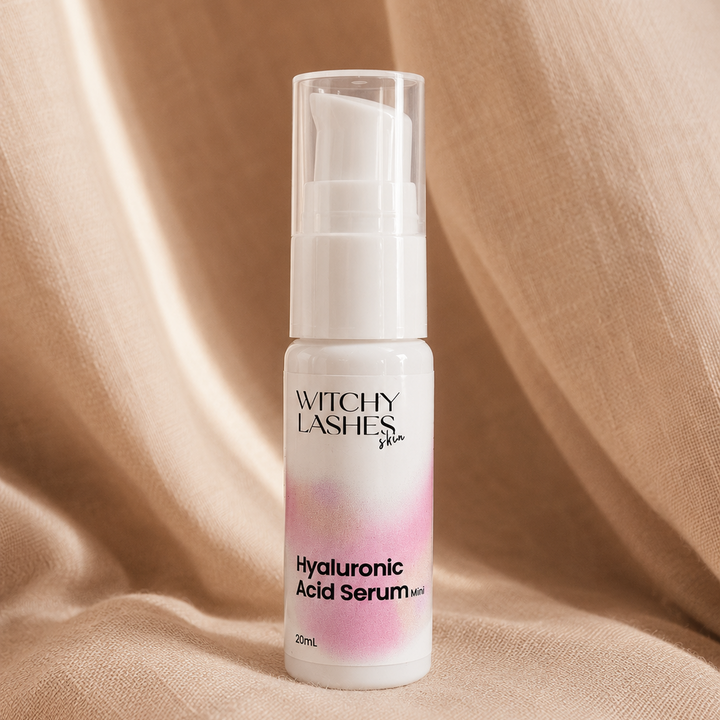
If adding richer creams keeps leaving the tight feeling behind, the first question worth asking is whether what you are feeling is actually a water problem, not an oil problem. A few drops of Hyaluronic Acid Serum on damp skin, sealed with a facial oil or cream, addresses the water side of that.
How to tell at home: the pinch test
This takes less than ten seconds and gives a useful first clue.
- Wash and dry your hands.
- With clean, gentle fingers, lightly pinch a small section of your cheek between thumb and index finger.
- Hold for a second or two, then release.
- Watch how the skin moves.
If it springs back smoothly, hydration is likely comfortable. If it holds the crease for a moment, or settles into fine lines before releasing, dehydration may be part of the picture. You can do the same test on the back of your hand.
This is not a perfect diagnostic. It is a quick clue, most useful when combined with how your skin actually feels throughout the day.
The skin that drinks moisturiser and still feels tight twenty minutes later is not asking for a richer cream. It is asking for water first.
Signs your skin may be dehydrated
Dehydration does not always look like classic dry skin. You can have oily, combination or acne-prone skin and still be dehydrated. Some signs to watch for:
- Your face feels tight even when it looks shiny.
- Fine lines around the eyes or smile lines look more pronounced than usual, especially by the end of the day.
- Your skin feels as though products disappear into it without leaving it comfortable.
- Makeup sits oddly on the surface, clinging to certain areas.
- After cleansing, your face feels tight before you have even reached for moisturiser.
- Your skin looks duller than usual in the afternoon.
The combination of shine on the surface with tightness underneath is particularly telling. When the upper layers of skin are low in water, oil glands can sometimes overcompensate with more sebum. The answer is usually water first, not a stronger cleanser to remove the oil.
Why skin can suddenly become dehydrated
If your skin only started feeling dry in your late thirties or forties, when it felt comfortable before, dehydration is often the more useful place to start. A few common reasons.
Your skin makes its own hyaluronic acid. The amount it produces depends partly on oestrogen. Research has shown that endogenous hyaluronic acid content reduces measurably with age and hormonal change (Lephart and Naftolin, 2022). This begins for many women in the late thirties and becomes more noticeable through perimenopause and menopause.
The same shift can happen postpartum, during cancer treatment recovery, or through long periods of stress. The body is busy with other things, and the skin's own water-holding capacity quietly reduces.
Your cleanser may have shifted the balance. A cleanser that worked at thirty-two can start to over-strip at forty-two. As your skin's lipid production slows, the same foaming cleanser takes a larger share of what is there. The cleanser has not changed. The relationship between you and your cleanser has.
The air around you is drier than you think. Air-conditioned rooms in an Australian summer often sit at twenty-five to forty per cent relative humidity. Skin holds water comfortably at fifty to sixty per cent. Eight hours in an office is, in skin terms, eight hours in a desert.
You have been treating dehydration as dryness. Years of richer creams without a humectant step can leave the skin with plenty of seal and not enough water to seal in. The cream is fine. The water step was always the missing piece.
Common questions
Can oily skin be dehydrated?
Yes, very often. Dehydration is about water, not oil. Your skin can produce plenty of oil on the surface and still be low in water underneath. The mix of shine and tightness at the same time is one of the clearest signs.
Can dry skin and dehydrated skin happen at the same time?
Yes. If your skin is naturally dry and also dehydrated, your routine needs both: a humectant step to add water, and a richer seal to add oil and slow water loss. The order is the same: water first, then seal.
How long does it take to improve dehydrated skin?
Some people notice a difference the first day because the skin feels softer for longer after applying the routine. Most see a clear shift in two to four weeks of consistent morning and evening use. If your skin is still tight after a month, look at your cleanser, your environment, or speak with a GP to rule out an underlying condition.
Does drinking more water fix dehydrated skin?
Drinking water is good for overall health, but it does not move directly into the upper layers of your skin where dehydration shows. Topical hydration matters more for how your skin feels. Drink water for your overall health. Apply a humectant like hyaluronic acid for your skin's water layer.
Is hyaluronic acid better for dry or dehydrated skin?
Hyaluronic acid is most useful for dehydrated skin, because dehydration is a water problem and hyaluronic acid is a humectant that binds water in the upper layer of skin. It can also help dry skin, but dry skin usually needs additional oils and richer ingredients alongside it to address the oil side of the picture.
What is the best ingredient for dehydrated skin?
Hyaluronic acid is the most common and well-tolerated. Glycerin is another. Both are humectants that help the skin hold water. They work best applied to slightly damp skin and sealed with a facial oil or richer cream over the top.
Where to next
- The full picture Why skin feels dry no matter what you put on it, and how the two-step sequence works.
- After washing Why skin feels tight after cleansing, and what the sixty-second settle-down looks like.
- Australian summer How air conditioning changes what dehydrated skin needs, and what holds up through summer.
References
- Bukhari, S.N.A., et al. (2023). Hyaluronic acid, a promising skin rejuvenating biomedicine. International Journal of Biological Macromolecules, 209(Pt A), 87-95.
- Lephart, E.W., & Naftolin, F. (2022). Factors controlling skin aging and the beneficial role of estrogen or bioidentical hormones. Aesthetic Surgery Journal, 42(8), 920-940.

