

Why Your Skin Feels Dry No Matter What You Put On It
This is one of the most common questions I hear, and it is almost always asked by someone who has already tried the obvious things. A richer cream. A different brand. Applying more of it. The tight, dry feeling keeps coming back, often by mid-morning, and the instinct is that the right product just has not been found yet.
Usually, the right products are already there. The missing piece is the order in which they work, and a step that most moisturiser labels do not describe.
What your skin is actually holding
The top layer of your skin, the stratum corneum, is roughly fifteen to twenty cells deep. It is only about as thick as a sheet of cling film. Everything your skin holds onto, and everything it lets go of, passes through this layer.
Skin holds water in two ways. Some is bound to molecules within the skin cells themselves. Some sits between the cells, held there by lipids (the oils your skin produces) and natural humectants like hyaluronic acid that your body makes for itself.
When that water layer is full, your skin feels soft, plump, and comfortable. When it runs low, skin can feel tight. Fine lines may look more pronounced. Makeup can sit strangely. Your face may feel as though it is drinking moisturiser and immediately asking for more.
Most people respond by reaching for a richer cream. That instinct is reasonable, but it addresses only half of what is needed.
Most moisturisers contain three kinds of ingredients: humectants, which attract water; emollients, which soften the skin surface; and occlusives, which slow water from evaporating through the skin. A standard rich cream typically leans toward emollients and occlusives. It is good at sealing.
But if the water layer underneath has thinned, a seal has very little to work with. The cream does its job. The problem is what it is sealing in.
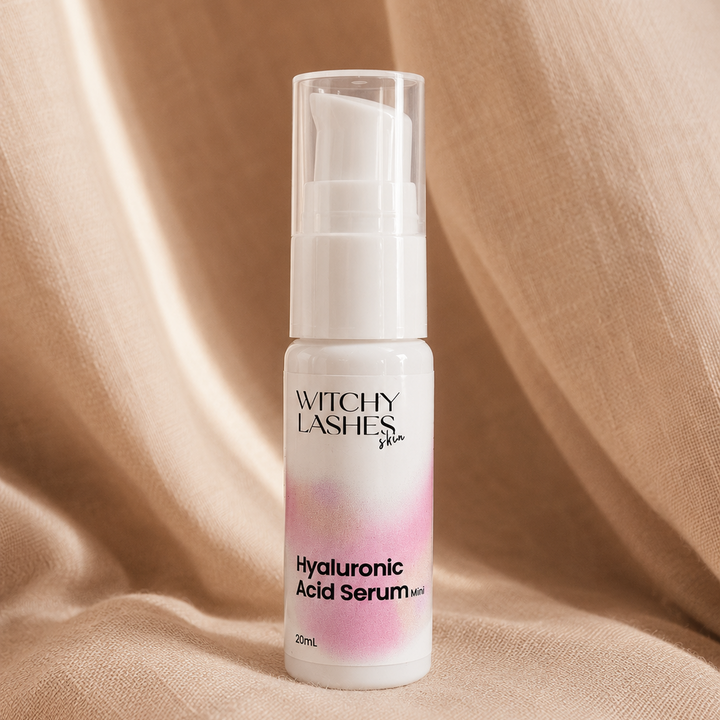
The step that is often missing is a dedicated humectant before the seal: a few drops of Hyaluronic Acid Serum pressed into slightly damp skin, giving the surface something to hold before the oil or cream goes on top.
Why cream alone often cannot fix dehydration
Hyaluronic acid is a humectant capable of binding many times its weight in water. In practice, it pulls moisture from wherever it can find it.
In a comfortably humid environment, roughly fifty to sixty per cent relative humidity, it draws moisture from the air and from the skin's own deeper layers, holding it closer to the surface. In a dry environment, which includes most air-conditioned homes and offices in an Australian summer, there may not be much moisture in the air to draw from.
That is when hyaluronic acid used on its own, on dry skin with nothing sealed over it, can actually feel less comfortable than doing nothing. It may pull water from deeper in the skin toward the surface, where it then evaporates.
And a rich cream on its own, applied when the skin's water layer is already low, is mostly sealing in dryness. It can feel like it is sitting there rather than doing anything.
Research measured this directly. Skin treated with a hydrating mist and left unsealed lost thirty-seven per cent more water within fifteen minutes than skin sealed straight after misting. The first step did its job. The missing seal undid part of it.
Both steps work. They simply need each other, and they need to happen in the right order.
Endogenous hyaluronic acid content reduces measurably with age and hormonal change.
This matters because the tight feeling that arrives in the late thirties and forties is not always about the products. It is sometimes about what the body has quietly stopped producing in the same quantities. External humectant support, sealed in properly, picks up some of what the body has reduced.
The two-step rule: water in, water held
The whole logic fits into a single principle.
Step one: water in. On clean, slightly damp skin, apply a humectant, usually hyaluronic acid. Damp skin matters because the water already there gives the humectant something to bind to, rather than asking it to pull moisture from somewhere else. Hyaluronic acid has been shown to improve skin hydration in topical applications (Bukhari et al., 2023).
Step two: water held. Within a minute or two, while the skin still feels soft, follow with an occlusive: a facial oil, balm, or richer cream. The seal slows transepidermal water loss, which is the steady evaporation that happens through skin throughout the day. Occlusive formulations can reduce transepidermal water loss by between thirty and eighty per cent depending on formulation.
That is the complete routine. The richness of the seal can shift with the season, lighter in summer, heavier in winter, but the order stays the same.
If you use only a serum, you are doing the water step without the seal. If you use only a cream, you are sealing without enough water underneath. Most skin that is changing needs both, in that order, morning and evening.

Five reasons your skin still feels dry
Usually one of these is responsible for the tight feeling that keeps returning. Sometimes two are quietly stacked.
1. Your skin is dehydrated, not dry
Dry skin is a type. It means your skin produces less oil than it needs, often genetic and often lifelong. Dehydrated skin is a condition. It means there is not enough water in the upper layers. Any skin type can become dehydrated, including oily and combination skin.
The quickest at-home check is the pinch test: pinch a small section of cheek between thumb and forefinger and release. If it springs back smoothly, hydration is likely comfortable. If it holds the crease for a second or settles into fine lines, dehydration is probably the answer.
We go deeper on the distinction in dehydrated skin versus dry skin. Dehydrated skin needs water first, then a seal. Genuinely dry skin needs more emollients and occlusives. Most "I have tried everything" stories are actually dehydration being treated as dryness, which is why the richer cream kept not working.
2. Your cleanser is shifting the balance
Your skin's lipid layer is carefully arranged. A cleanser too high in pH, or too heavy on surfactants, can strip more lipids than your skin replaces overnight. The result is faster water loss, a tight feeling within minutes of washing, and a moisturiser that has more work to do than one product can manage.
The cleanser that worked at thirty-two may not work at forty-two. As your skin's own lipid production slows, a foaming cleanser that once felt comfortable may start to over-strip. If the tight feeling arrives every time you wash, the cleanser is the first place to look.
If tight skin after washing is the main problem, we look at it closely in why skin feels tight after washing.
3. The air is drier than your skin wants it to be
Air-conditioned rooms in an Australian summer often sit around twenty-five to forty per cent relative humidity. Skin holds water more comfortably around fifty to sixty per cent. Eight hours in an air-conditioned office is, in skin terms, eight hours in a desert. Heat outside compounds it, as does wind, swimming pools, and long flights.
You cannot always fix the air. You can adjust the routine so it holds up in the air you actually live in, which in much of Australia means a more consistent sealing step in summer, not just in winter.
4. Your skin's own hydration has changed
This is the one almost nobody mentions, and one of the biggest reasons a moisturiser that worked for years can quietly stop working.
Your skin produces its own hyaluronic acid. The amount it produces depends partly on oestrogen. Research has shown that this endogenous production reduces measurably with age and hormonal change (Lephart and Naftolin, 2022). For many women, this begins in the late thirties and becomes more noticeable through perimenopause.
The same shift can be part of postpartum recovery, and it can occur during and after cancer treatment, when the body is rebuilding. The answer is not necessarily a heavier cream. It is replacing some of the humectant the body is no longer producing in the same quantities, and then sealing it in the way the body once would have.
5. There is no seal over the serum
If you use a serum only, even a beautiful humectant serum, your skin may quietly lose that moisture through the morning. If you use a cream only, your skin may feel tight by mid-morning because there was little water to seal in.
The most common pattern in the notes I receive is: "I use a serum and a moisturiser and my skin is still dry." Usually, when I ask, the serum is applied to dry skin, or the cream is applied immediately after washing, without a humectant step first. The architecture matters as much as the ingredients.
Common questions
Should I apply moisturiser to wet skin or dry skin?
Slightly damp is usually best for the first step. Press the humectant into your skin without towel-drying hard, then apply within sixty seconds. The damp surface gives the hyaluronic acid something to bind to immediately. After the humectant has settled, your skin can be a little drier when you apply the oil or cream on top.
Can my skin become immune to moisturiser?
No. Skin does not become immune. It changes. The moisturiser that was right for you at thirty-five may not be right at forty-five because your skin may now produce less oil and hold less water than it used to. Often the cream is fine. What is missing is the humectant step that should come before it.
Why does my face feel dry but look oily?
Often dehydration. When the upper layer of skin loses water, oil glands can sometimes compensate by producing more sebum, so the face appears shiny and feels tight at the same time. The answer is usually water first, not stripping the oil away with a stronger cleanser, which tends to worsen the cycle.
Is hyaluronic acid better than a moisturiser?
Not better. Different. Hyaluronic acid is a humectant that attracts and binds water in the upper layer of skin. A moisturiser, depending on its formula, functions more as a seal. Most skin needs both, and needs them in this order: humectant first on damp skin, seal second.
How quickly should this routine settle the tight feeling?
Many people notice a difference within the first few days because the skin feels softer for longer. After a couple of weeks of consistent use, the tight, drinking-it-in feeling should feel calmer and less constant. If after three or four weeks your skin is still very tight, check your cleanser, your climate, or speak with a GP to rule out an underlying condition.
Do I still need this routine in winter?
Yes. The principle is the same in every season, but indoor heating and cold wind increase transepidermal water loss in winter too. What may change is the weight of the seal: a richer cream over the serum in winter, a lighter oil over the serum in summer. The humectant step stays, season to season.
Where to next
- Dehydration How to tell if your skin is dehydrated or genuinely dry, and why the answer changes what you use.
- After washing Why skin feels tight after cleansing, and what that says about the cleanser and the follow-up steps.
- Australian summer How air conditioning changes what dry skin needs, and what holds up through the warmer months.
References
- Bukhari, S.N.A., et al. (2023). Hyaluronic acid, a promising skin rejuvenating biomedicine: A review of recent updates and pre-clinical and clinical investigations on cosmetic and nutricosmetic effects. International Journal of Biological Macromolecules, 209(Pt A), 87-95.
- Lephart, E.W., & Naftolin, F. (2022). Factors controlling skin aging and the beneficial role of estrogen or bioidentical hormones. Aesthetic Surgery Journal, 42(8), 920-940.
- Slon, V., et al. (2024). Chamomile components affecting the wound healing process in an in vitro model. Molecules, 29(1), 197.

