

Why Your Face Feels Tight After Washing: What It Means and How to Fix It
Your face feels tight after washing because your cleanser strips the surface lipids that normally slow water loss, so moisture evaporates faster than usual. It is not a sign your skin is clean, it is a sign of transepidermal water loss. The fix: press a hydrating serum into damp skin within thirty seconds of rinsing, then seal it with an oil or moisturiser.
You rinse your face, reach for your towel, and before you have even dried off, your skin already feels tight. Not clean-tight. Uncomfortable-tight. Like it needs something immediately.
If this has become your normal, it is worth understanding what is actually happening, because the sensation is telling you something specific. It is not a random irritation, and it is rarely about the water quality alone. It is your skin's barrier function giving you real-time feedback.
This article explains what the tightness means, what triggers it, and what one-step change resolves it for most people, without overhauling your whole routine.
What "tight" actually means in skin terms
When your skin feels tight, what you are experiencing is transepidermal water loss: water evaporating from the outer layers of skin faster than it can be retained. Your skin barrier, the outermost layer of skin cells and the lipids between them, is responsible for holding water in. When that barrier is disrupted, even temporarily, water escapes more quickly and you feel it as tightness.
The sensation tends to be sharpest in the minutes directly after washing because water evaporation accelerates as surface moisture dries on the skin. The window between rinsing and applying anything is when your skin is most vulnerable to that rapid loss.
For women in perimenopause and beyond, the baseline is already shifted. Oestrogen plays a significant role in both barrier function and the production of endogenous hyaluronic acid, the molecule that holds water within skin tissue. As oestrogen declines, the skin holds less water and recovers from disruption more slowly than it did in your thirties. [2] A cleanser that never caused a problem at thirty-five may now reliably cause tightness at forty-five, because the underlying resilience has changed.
Five things that trigger that tight feeling
1. A cleanser that strips more than it cleans
Many cleansers, particularly foaming ones, use surfactants to lift oil, makeup, and SPF from the skin. The surfactants do not distinguish between the surface grime and the lipids your skin needs. If your cleanser leaves a "squeaky clean" feeling, it has likely removed some of the barrier lipids along with the day's debris. Squeaky is not a sign of clean. It is a sign of strip.
2. Water that is too warm
Hot water is more effective at dissolving fats, including the fats in your skin's barrier. A study that examined the relationship between water temperature and skin barrier recovery found measurably higher transepidermal water loss following washing with hot water compared with lukewarm water. The effect is temporary but cumulative over time. [1] Cool to lukewarm is better for barrier-sensitive skin.
3. Skipping the humectant step
When skin is damp after washing, water is temporarily available at the surface. If you apply nothing and let the skin air-dry, that surface water simply evaporates, sometimes pulling moisture from deeper layers with it. Applying a humectant while skin is still damp gives the humectant molecules something to bind to and retain. Skipping this step is where most of the damage is done.
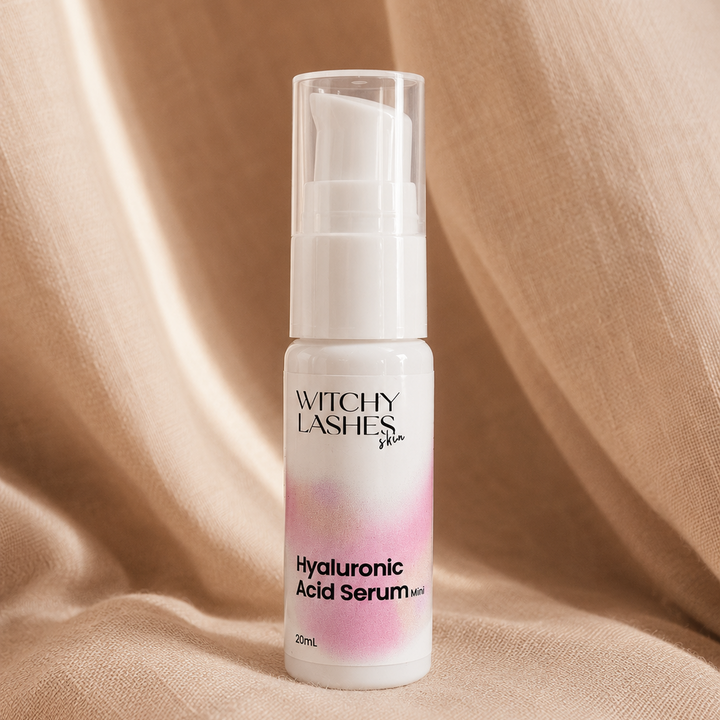
A lightweight Hyaluronic Acid Serum applied to damp skin immediately after rinsing is the one change that resolves post-wash tightness for most people. The timing matters: damp, not dry. Within thirty seconds of rinsing.
4. Air conditioning and central heating
Both air conditioning and heating reduce the humidity of the air indoors significantly. Low ambient humidity increases transepidermal water loss because the skin is constantly trying to equilibrate with the drier air around it. If you are washing your face in a humidity-controlled environment, the post-wash evaporation is happening faster than it would in natural outdoor humidity. This is a particular issue in Australian summer, where many people move between humid outdoor air and aggressively air-conditioned interiors all day.
5. Over-exfoliation
Chemical exfoliants, including AHAs and BHAs, work by loosening the bonds between dead skin cells. They are effective but they also temporarily compromise barrier integrity if used too frequently. If your tightness started or worsened around the time you added an exfoliant, that is likely a contributing factor. For perimenopausal skin, once a week is usually enough.
The fix: a 60-second calm-down routine
The good news is that post-wash tightness usually does not require a new cleanser or an elaborate repair routine. It requires addressing the single most common gap: no humectant applied at the right moment.
The sequence:
- Rinse your cleanser off with cool to lukewarm water.
- Pat face with a towel very gently, leaving skin visibly damp, not soaking but not dry.
- Apply 2 to 3 drops of a hyaluronic acid serum directly to the damp skin. Press in gently rather than rubbing.
- Wait 60 seconds. This allows the humectant to absorb before you seal.
- Apply your moisturiser over the top to lock the hydration in.
That is the entire routine. For most people, tightness after washing resolves within one to two days of this adjustment.
In laboratory studies, hyaluronic acid applied to damp skin demonstrated significantly greater retained moisture compared with application to dry skin, suggesting that the timing of humectant application, not only the ingredient itself, influences hydration outcomes.Bukhari et al. (2018) [1]
Why Australian conditions make this worse
The specific combination of Australian conditions, high UV, variable humidity, and the lifestyle pattern of moving between outdoor heat and air-conditioned interiors, creates a stronger barrier challenge than many people recognise.
In coastal cities like Sydney and Brisbane, outdoor humidity can be high, but indoor air conditioning is aggressive. The skin moves between these environments repeatedly during the day. In dry inland areas like Adelaide in summer or Perth in late spring, the outdoor air is already low in humidity before the indoors compounds it.
SPF is essential year-round in Australia, but many sunscreens, particularly high-SPF formulas, use occlusive or drying agents that can interact with sensitive barrier skin. Applying SPF over an unhydrated base can amplify the tight feeling by mid-morning.
The two-step sequence, humectant then seal, is especially relevant in Australian conditions because it addresses both the water-retention problem and the barrier-sealing problem at the same time.


Witchy Lashes Hyaluronic Acid Serum
A lightweight serum formulated for application to damp skin. Three molecular weights of hyaluronic acid to hold hydration at different depths. No fragrance, no alcohol, no occlusive heaviness.
See the Hyaluronic Acid SerumWhen to address the cleanser, not just the routine
If tightness persists even after adding a humectant step, the cleanser is worth reconsidering. Look for a cleanser that does not foam aggressively or leave a "clean" sensation. Cream cleansers, gel cleansers that rinse clear without stripping, or micellar water (without alcohol) are generally better choices for barrier-sensitive skin.
A simple test: if your skin still feels tight 60 seconds after rinsing, even before you have applied anything, the cleanser is likely stripping too much. If the tightness only appears as the skin dries, the humectant step is the missing piece.
In the evening, after the humectant step and moisturiser, pressing in a few drops of Blue Tansy Calming Facial Oil as the final seal provides an additional occlusive layer that slows overnight water loss. This is particularly useful for skin that continues to feel tight or dry through the night.
Post-wash tightness that does not respond to a gentle cleanser and a humectant step, tightness accompanied by redness, flaking, or bumps that do not resolve, or any skin change that is new, spreading, or distressing warrants a visit to your GP or a dermatologist. If you are in perimenopause and experiencing skin symptoms alongside other changes (sleep, mood, cycles, fatigue), speak with your GP about the full picture. The Australian Menopause Society has a find-a-doctor tool at menopause.org.au.

The post-wash tightness thing was the first sign I noticed that my skin had changed. For years it was fine. Then one day it just wasn't. I thought it was the Sydney summer, or the new cleanser I'd tried. It took me longer than I'd like to admit to realise it was the gap between rinsing and applying anything. My then two-year-old had interrupted the routine one morning and I'd left the serum off, and the tightness that day was noticeably worse. That was the moment I understood the timing mattered as much as the product.
The Renewal Ritual is the two-step answer: the serum on damp skin, the oil to seal at night. Simple because it has to fit into a real morning.
Marcha, founder of Witchy Lashes
Common questions
Is skin tightness after washing a sign of dry skin?
Not necessarily. Skin can be oily and still feel tight after washing if the cleanser has disrupted the barrier or if the humectant step is missing. Tightness is more specifically a sign of transepidermal water loss, water evaporating from the outer skin layers, which can happen in any skin type. The fix is the same regardless: a humectant applied to damp skin within 30 seconds of rinsing.
Can hard water cause skin tightness after washing?
Hard water (water with high mineral content, common in parts of Melbourne and inland Australia) can contribute to post-wash tightness. The minerals interact with cleanser surfactants to leave a residue that can irritate sensitive skin and slightly compromise barrier function. If you have changed location and your tightness started there, water quality is worth considering. A gentle micellar water wipe after rinsing can help. However, the humectant timing step resolves the tightness for most people regardless of water quality.
Why does my skin feel tight even after moisturising?
If moisturiser alone is not resolving the tightness, the sequence is likely the problem rather than the moisturiser itself. Moisturisers seal in hydration, but they cannot hydrate skin that is already depleted. Applying moisturiser to dry, depleted skin without a humectant underneath is like painting over bare wood: it sits on top rather than penetrating. The fix is a humectant (hyaluronic acid serum) on damp skin first, then moisturiser over the top to seal. The two steps together resolve tightness that moisturiser alone cannot.
Should I stop using foaming cleansers?
Not necessarily all foaming cleansers. Some low-foaming or gentle foaming formulas are fine for sensitive skin. The issue is cleansers that foam aggressively and leave a "squeaky clean" sensation. That sensation indicates the barrier lipids have been stripped along with the surface debris. If your foaming cleanser leaves your skin comfortable and you are still getting tightness, the humectant timing step is the more likely culprit. If your cleanser leaves your skin feeling stripped even before tightness develops, a gentler formula is worth trying.
Does skin get tighter after washing during perimenopause?
For many women, yes. Declining oestrogen reduces both natural hyaluronic acid production and barrier function, which means skin holds less water at baseline and recovers from disruption more slowly. A cleanser or routine that never caused tightness in your thirties can reliably cause it in your forties, not because the cleanser changed, but because the skin's resilience has shifted. The same humectant timing fix applies, but perimenopausal skin may benefit from a gentler cleanser and a slightly richer moisturiser to seal.
How quickly will the tightness resolve if I add the humectant step?
Most people notice an improvement from the first use. Skin that has been consistently depleted may take two to three days to stabilise. If tightness persists after a week of consistent humectant application on damp skin, the cleanser is worth reconsidering. If tightness persists alongside redness, flaking, or sensitivity, see a GP or dermatologist as the cause may be beyond routine dehydration.
The Renewal Ritual
The Hyaluronic Acid Serum for the damp-skin step. Blue Tansy Calming Facial Oil to seal at night. The two products that address post-wash tightness at both ends of the day.
Related reading
References
- Bukhari, S. N. A., Roswandi, N. L., Waqas, M., Habib, H., Hussain, F., Khan, S., Sohail, M., Ramli, N. A., Thu, H. E., & Hussain, Z. (2018). Hyaluronic acid, a promising skin rejuvenating biomedicine: A review of recent updates and pre-clinical and clinical investigations on cosmetic and nutricosmetic effects. International Journal of Biological Macromolecules, 120(B), 1682–1695.
- Lephart, E. D., & Naftolin, F. (2022). Menopause and the skin: old favorites and new innovations in cosmeceuticals for estrogen-deficient skin. Dermatology and Therapy, 11(1), 53–69.

