

This is one of the questions I hear most often from women in their late thirties, forties, and fifties. I have used this same cream for ten years. Why is it no longer enough? There is usually not one dramatic reason. It is more often three quiet shifts stacked together.
What moisturiser actually does
Moisturisers contain three kinds of ingredients in different proportions. Humectants, like glycerin and hyaluronic acid, attract and bind water. Emollients, like squalane and shea butter, soften the skin surface. Occlusives, like plant oils, beeswax and petrolatum, slow water from leaving the skin.
Most rich creams lean heavily toward emollients and occlusives. That makes them excellent at sealing and softening. It does not always make them excellent at adding water to skin that is short of it.
So when a moisturiser feels like it has stopped working, it has not necessarily failed. It may still be doing the job it was designed to do. The water layer underneath it has changed. The cream is fine. There is just less water for it to seal in.
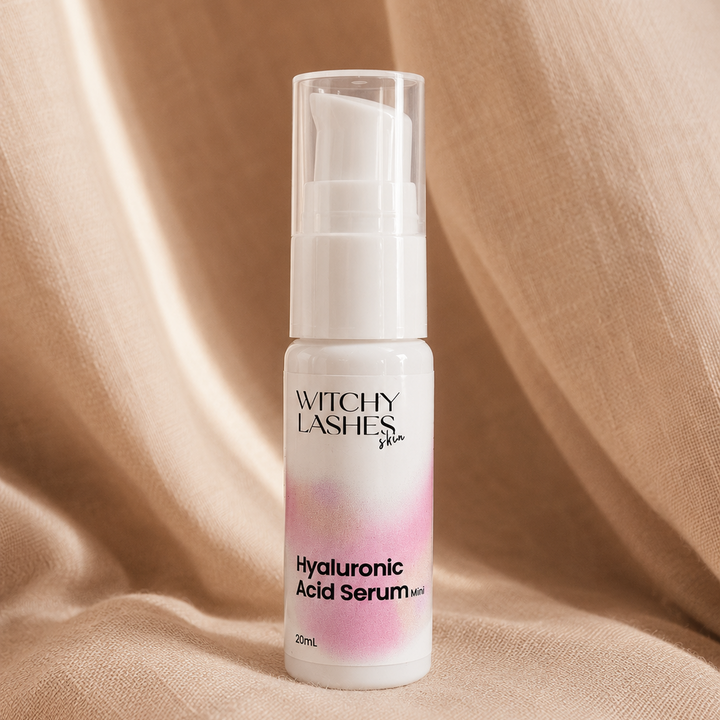
The step that bridges that gap is a humectant applied before the cream: a few drops of Hyaluronic Acid Serum pressed into slightly damp skin, then the cream or oil over the top. Now the cream has something to hold.
Three shifts that change how a cream performs
Your skin is producing less of its own oil. Sebum production slows gradually from your thirties onward. The same cleanser may take more than it used to, and the same moisturiser has more work to do before your day has even started.
Your skin is making less of its own hyaluronic acid. Research has shown that endogenous hyaluronic acid content reduces measurably with age and hormonal change (Lephart and Naftolin, 2022). This is the one almost nobody mentions, and it is one of the biggest reasons a cream that worked well at thirty-five starts to feel insufficient at forty-five.
Your environment has not changed, but your skin's tolerance for it has. Air-conditioning that did not bother your skin at thirty-five may start drying it out at forty-five. The flight you once bounced back from in a day may now take a week for your skin to forgive. The cream itself is rarely the whole issue. The relationship between your skin and the cream has shifted.
As oestrogen drops in perimenopause, oil production, collagen, and the skin's own creation of hyaluronic acid can all slow.
The perimenopausal shift
This is the part many women are never told. Oestrogen plays a quiet but real role in skin. It supports oil production, collagen, and the skin's own production of hyaluronic acid. As oestrogen drops in perimenopause and menopause, all three can slow.
The shift is not always sudden. It may begin gradually in the late thirties, become more noticeable through the forties, and feel most obvious somewhere between forty-five and fifty-five. The water that skin used to hold easily may now need help to hold.
A heavier moisturiser does not solve that on its own. The cream cannot add water that is not there. It can only seal water that is already present. What helps is replacing some of the humectant support your body is no longer making in the same quantities. That is exactly what a hyaluronic acid serum is designed to do.
The same logic can apply postpartum, during cancer treatment recovery, and through long periods of stress or illness. The body is busy. The skin's own production may slow. The routine that worked before stops being quite enough.
The cleanser crossover
If your moisturiser feels less effective than it used to, look at your cleanser too. A foaming cleanser that suited your skin at thirty-two may be too stripping at forty-two. When your skin makes less oil on its own, the same cleanser starts to take a larger percentage of what is there.
If your face feels tight before you even apply moisturiser, your cleanser may be doing too much. A gentler cleanser, often cream-based, lotion-based, or oil-based, can change how your skin feels ten minutes after washing more than any moisturiser swap can.

Why the fix is not a richer cream
If your moisturiser has stopped working and you reach for a richer one, you may feel better for a few days. Then the same tight feeling returns, sometimes with extra heaviness on top.
That is usually because the heavier cream is covering a layer that is still short of water. The fix is not always richness. It is sequence.
A humectant first, on damp skin, to add water. A seal over the top, to hold it there. That sequence works whether the seal is the same moisturiser you have loved for years, a lighter facial oil, or something richer in winter. The water step is what changes the experience.
In the morning: cleanse gently, leave skin slightly damp, press in three to four drops of Hyaluronic Acid Serum within sixty seconds, wait thirty seconds, then press in a few drops of Blue Tansy Calming Facial Oil as the seal. Sunscreen over the top. Evening: the same two steps without the sunscreen. You can keep any cream you love. The non-negotiable part is the humectant first, on damp skin, before anything else goes on.
The Blue Tansy oil contains chamazulene, a compound with documented calming and antioxidant effects in laboratory studies (Slon et al., 2024). If your skin is reactive or sensitised, patch test it on the inside of your wrist for two nights before applying it to your face.
Common questions
Can my skin become immune to a moisturiser?
No. Skin does not become immune. It changes. The moisturiser that was right for you at thirty-five may not be right at forty-five because your skin may produce less oil and hold less water than it used to. Often the cream is fine. What is missing is a humectant step before it.
Should I keep changing moisturisers until I find one that works?
Often the cream is not the issue. If you have tried several richer moisturisers and your skin still feels tight, the missing step is probably a humectant underneath, applied to damp skin. Adding that step usually changes the experience faster than swapping creams.
Why does my face feel drier in my forties than it did in my twenties?
Your skin's own water-holding ability changes with age and hormonal shifts. Oestrogen supports both oil production and the skin's natural hyaluronic acid. As oestrogen drops in perimenopause, your skin may hold less water than it used to. The same routine at forty-five is asking more of a thinner water layer than it was asking of at twenty-five.
Do I need a different moisturiser in summer and winter?
Possibly, but only for the seal step. The humectant step stays the same all year. In winter, a richer cream on top may feel better. In summer, a lighter facial oil over the same humectant is often more comfortable. The water-in step does not change with the season.
Should I apply moisturiser to wet or dry skin?
The first step, the humectant, should go on slightly damp skin. The moisturiser or oil that follows can go on once the skin has dried down slightly. The damp surface matters for the humectant because it gives the ingredient water to bind to.
How long until I notice a difference?
Many women notice the first improvement within a few days because the skin feels softer for longer in the morning. Two to four weeks of consistent use is usually enough to see whether the routine has properly settled the tight, drinking-it-in feeling. If you are still tight after a month, check your cleanser, your environment, or speak with a GP to rule out an underlying condition.
Where to next
- The full picture Why skin feels dry no matter what you put on it, and why the seal needs water first.
- Dehydration The difference between dry skin (a type) and dehydrated skin (a condition), and how to tell which you have.
- After washing Why skin feels tight after cleansing, and how to settle it in sixty seconds.
References
- Bukhari, S.N.A., et al. (2023). Hyaluronic acid, a promising skin rejuvenating biomedicine. International Journal of Biological Macromolecules, 209(Pt A), 87-95.
- Lephart, E.W., & Naftolin, F. (2022). Factors controlling skin aging and the beneficial role of estrogen or bioidentical hormones. Aesthetic Surgery Journal, 42(8), 920-940.
- Slon, V., et al. (2024). Chamomile components affecting the wound healing process in an in vitro model. Molecules, 29(1), 197.

